Comparison: Standard vs Heavy-Duty Industrial Sewing Machines
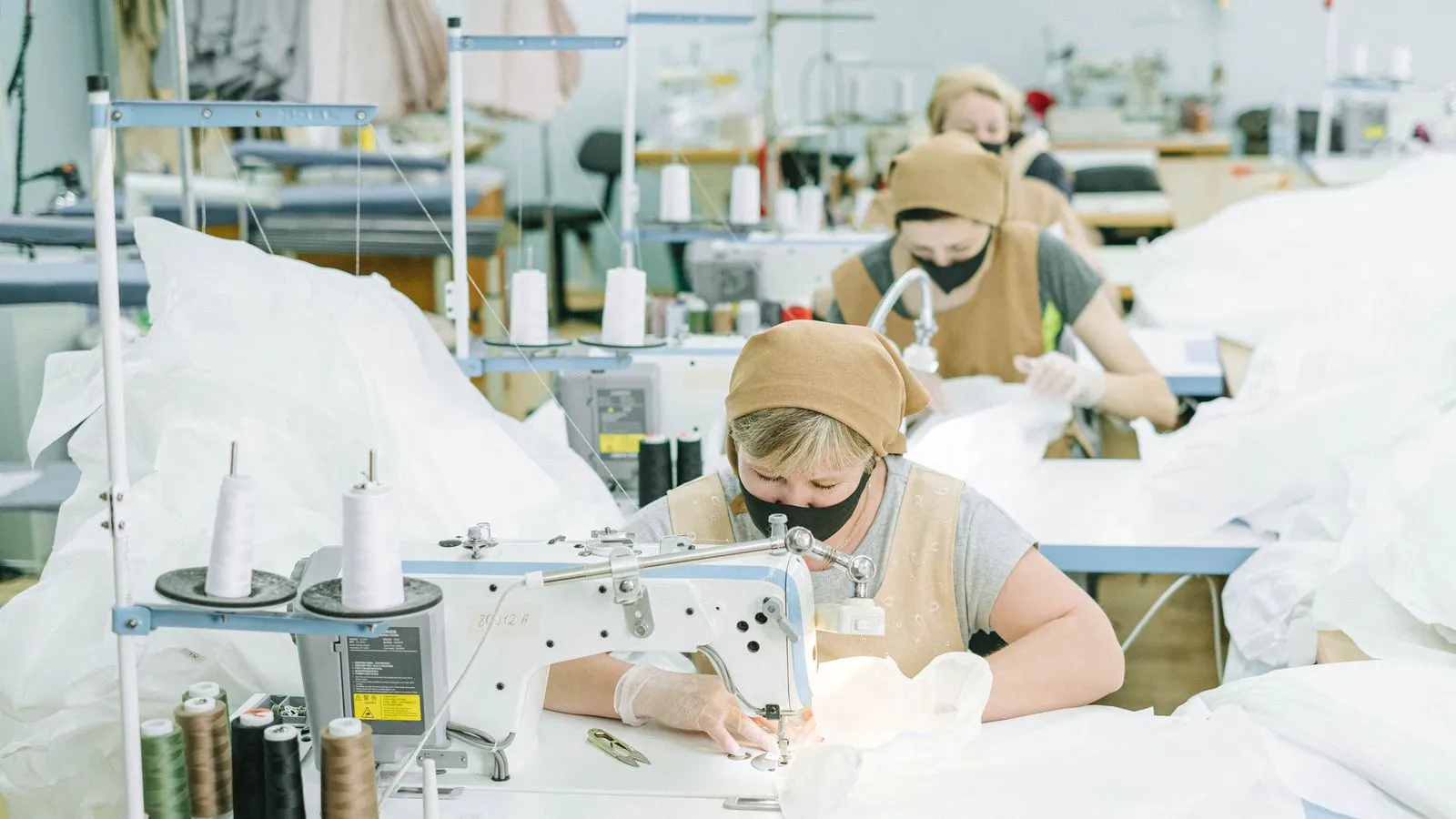
Standard machines handle general apparel at moderate speeds. Heavy-duty machines handle thick denim, leather, and high-volume production. The right sewing machine selection depends on fabric weight, stitch type, and expected output.
- Standard lockstitch machines suit most cotton, polyester, and blended apparel at moderate production speeds.
- Heavy-duty machines handle thick denim, canvas, leather, and high-volume output with reinforced drive components.
- Needle, presser foot, and presser foot pressure settings change the practical output of the same machine class.
- Match the machine to the fabric and the production schedule, not just the machine price.
Choosing between standard and heavy-duty industrial sewing machines is a decision about the fabric you will stitch and the volume you need to hold. A standard machine is built for general apparel. A heavy-duty machine is built for thick material and sustained output. The difference shows up in the motor, the needle bar, the presser foot system, and the way the machine handles a heavy seam.
What distinguishes a standard industrial sewing machine
A standard industrial sewing machine is a workhorse for everyday apparel. It handles cotton, polyester, nylon blends, jersey, twill, and most woven fabrics used in shirts, trousers, dresses, and outerwear shells. The machine uses a lockstitch mechanism with a needle bar, hook, and presser foot. The presser foot applies downward force to keep the fabric layers from shifting as the needle passes through.
The frame is usually cast iron or a lighter alloy. The needle bar moves up and down. The hook rotates beneath the needle to catch the upper thread and form the lock. Standard machines have a moderate number of stitches per minute. They are designed to hold a steady speed without excessive vibration. The presser foot pressure is adjustable, but the range is narrower than on a heavy-duty unit. This matters when stitching medium-weight fabric. Too much pressure can drag the lower layer. Too little pressure can let the fabric shift and cause skipped stitches or uneven seams.
A standard machine is easier to maintain. The parts are more common. Technicians can replace needles, hooks, and presser feet quickly. The machine is lighter, so it is easier to move between lines. The operator can change presser feet for different stitch types without much training.
What distinguishes a heavy-duty industrial sewing machine
A heavy-duty industrial sewing machine is built for material that resists the needle. Denim, canvas, leather, suede, coated fabrics, and thick interlinings require more force to form a clean seam. The machine uses the same lockstitch principle, but the components are reinforced. The needle bar is heavier. The presser foot system is stronger. The drive components are sized to handle a higher torque load.
The frame is typically cast iron. The needle bar and hook are made from hardened steel. The presser foot pressure range is wider, and the foot itself can be heavier. This allows the machine to push through multiple layers without bending the needle or pulling the fabric out of alignment. The thread feed path is also reinforced. Heavy thread can rub against a standard feed and wear it down. A heavy-duty machine uses a path that tolerates that wear.
The speed profile is different. A heavy-duty machine may run at a lower maximum speed than a high-speed standard machine, but it holds that speed under load. A standard machine can slow down when it hits a thick seam. A heavy-duty machine keeps the needle moving through the same fabric. The operator sees fewer needle breaks and fewer skipped stitches on the same material.
How to compare the two for your production line
The choice depends on three variables: fabric weight, stitch type, and production schedule. If you stitch medium-weight apparel at a moderate pace, a standard machine is enough. If you stitch denim jackets, canvas bags, or leather trims, a heavy-duty machine is the safer choice. If you stitch both, you may need both classes on the same line.
Use the table below to see where each option fits.
| Option | Best for | Limitations |
| Standard lockstitch machine | General apparel, cotton, polyester, blends, moderate volume | Struggles with thick denim, leather, and sustained high load |
| Heavy-duty lockstitch machine | Denim, canvas, leather, coated fabrics, high volume | Higher cost, heavier machine, slower on light fabric |
| High-speed standard machine | Fast stitching of light to medium fabric | Speed drops under heavy load, higher needle wear |
| Heavy-duty overlock machine | Edging and hems on thick fabric | Not a lockstitch option, different maintenance path |
| Multi-needle heavy-duty machine | Row stitching on thick fabric | Complex setup, high cost, specialized operator skill |
The table is a starting point. The real test is the fabric you will run every day. Bring a sample of the thickest material you plan to stitch. Run it through the machine. Count the needle breaks. Count the skipped stitches. Check the seam strength. The machine may look fine on light fabric and fail on the heavy material.
Needle, presser foot, and thread considerations
The machine class sets the limit, but the setup sets the result. A standard machine can stitch a medium-weight fabric well. A heavy-duty machine can stitch the same fabric well. The difference is what happens when the fabric gets thicker.
Needle selection is the first point. A standard machine uses a needle size that suits medium fabric. A heavy-duty machine uses a larger needle, often a denim or leather needle. The needle must be sharp and the correct size. A blunt needle on thick fabric stretches the holes. A needle that is too small for the fabric can break. A needle that is too large can leave visible holes on light fabric.
Presser foot pressure is the second point. The presser foot must hold the fabric layers without dragging them. On a standard machine, the pressure range is narrower. On a heavy-duty machine, the range is wider. The operator must set the pressure for the fabric. Too much pressure on light fabric creates puckering. Too little pressure on thick fabric causes the lower layer to shift and the seam to pull.
Thread selection is the third point. A heavy thread on a standard machine can wear the feed and the hook. A heavy-duty machine uses a feed and hook that tolerate the wear. The thread must match the fabric weight. A thin thread on thick fabric can snap. A thick thread on light fabric can leave a bulky seam. The thread path must be clean and the tension must be adjusted for the thread weight.
When to choose standard machines
Choose standard machines when the production is general apparel. Shirts, blouses, dresses, trousers, and outerwear shells are typical. The fabric is usually cotton, polyester, or a blend. The seam is not heavily loaded. The production pace is moderate.
Standard machines are easier to staff. The operator can learn the basics quickly. The maintenance is routine. The machine is lighter, so it is easier to move. The cost is lower, so it is easier to buy in quantity.
Choose standard machines when you need to change stitch types often. A standard machine is easier to reconfigure. The presser feet are easier to change. The thread feed is simpler. The machine is more flexible for small batches and varied styles.
Choose standard machines when the production is light to medium weight. The machine will not be pushed to its limit. The seam strength will be enough. The operator will not spend time changing needles and adjusting pressure.
When to choose heavy-duty machines
Choose heavy-duty machines when the production is thick or loaded. Denim jackets, canvas bags, leather trims, and coated fabrics are typical. The seam is under stress. The production pace is high.
Heavy-duty machines are easier to run at full speed. The machine holds the needle through the thick fabric. The operator spends less time on needle changes. The seam is stronger. The machine is more durable.
Choose heavy-duty machines when the production is high volume. The machine must run for long periods. The components are sized to handle the load. The maintenance is less frequent. The machine is more reliable.
Choose heavy-duty machines when the fabric is thick or coated. The machine must push through the layers. The needle bar and presser foot are stronger. The thread feed is reinforced. The machine will not fail on the same material.
How to verify the machine before purchase
Before buying, run the machine on the actual fabric. Do not rely on a sample of light fabric. Bring the thickest material you will stitch. Run it for a set time. Count the needle breaks. Count the skipped stitches. Check the seam strength.
Check the needle bar. It should move smoothly. There should be no play. The needle should be straight. The presser foot should apply even pressure. The thread feed should be clean. The hook should be in good condition.
Check the maintenance records. Ask how often the machine is serviced. Ask what parts are replaced. Ask what the operator does before starting the shift. A machine that is not maintained well will fail on thick fabric. A machine that is maintained well will run longer.
Check the operator. The operator must know how to set the presser foot pressure. The operator must know how to change the needle. The operator must know how to adjust the tension. The operator must know how to clean the machine. A heavy-duty machine is harder to run. The operator must be trained.
The machine is only as good as the operator and the maintenance. A standard machine can run well with good care. A heavy-duty machine can run well with good care. The choice is about the fabric and the volume. Pick the machine that matches the job.
Frequently asked questions
Can a standard industrial sewing machine stitch denim?
A standard machine can stitch light denim if the needle and presser foot are set correctly. It will struggle on heavy denim and may slow down under load.
What is the main difference between a standard and heavy-duty machine?
The main difference is the strength of the needle bar, presser foot system, and drive components. A heavy-duty machine is built to push through thick fabric without bending the needle.
How do I know if I need a heavy-duty machine?
Run the thickest fabric you plan to stitch through the machine. If the needle breaks, the speed drops, or the seam is weak, you need a heavier machine.
Are heavy-duty machines more expensive to maintain?
Yes. The parts are larger and more expensive. The maintenance is less frequent, but each service is more costly.
Can a heavy-duty machine stitch light fabric?
Yes. A heavy-duty machine can stitch light fabric, but it may be slower and the operator must adjust the needle and presser foot pressure.