Buyers Guide: High-Speed Sewing Machines for Denim
Industrial sewing machine selection for denim requires balancing mechanical durability, thread tension control, and production speed. This guide outlines the criteria procurement teams use to evaluate heavy-duty lockstitch machines for garment production equipment procurement.
- Denim production requires lockstitch machines with reinforced needle plates and high-tension thread systems to prevent breakage.
- Evaluate thread tension, needle plate design, and motor power before comparing production speeds.
- Verify electrical power requirements and maintenance access to reduce downtime in high-volume garment production environments.
- Match machine capabilities to specific denim products, such as jeans, jackets, or workwear, rather than standardizing on one model.
- Use a decision checklist to verify machine compatibility with existing sewing lines and future production needs.
Why Denim Demands Different Sewing Machines
Denim is not a standard garment fabric. It is a heavy, tightly woven cotton twill that puts constant stress on sewing components. Standard industrial lockstitch machines designed for lightweight cotton or synthetic blends often struggle with the thickness and abrasiveness of denim.
The result is predictable. Needles break frequently. Thread snaps. Stitch quality drops. Machine downtime increases. For procurement managers managing garment production equipment, these failures translate directly to higher operating costs and missed delivery windows.
Selecting the right denim sewing machine requires understanding how mechanical components interact under heavy load. The machine must handle thick fabric, resist wear, and maintain consistent stitch quality over long production runs.
What Defines a Denim Sewing Machine
A denim sewing machine is a specialized industrial lockstitch machine built for heavy fabric processing. It differs from standard machines in several key areas.
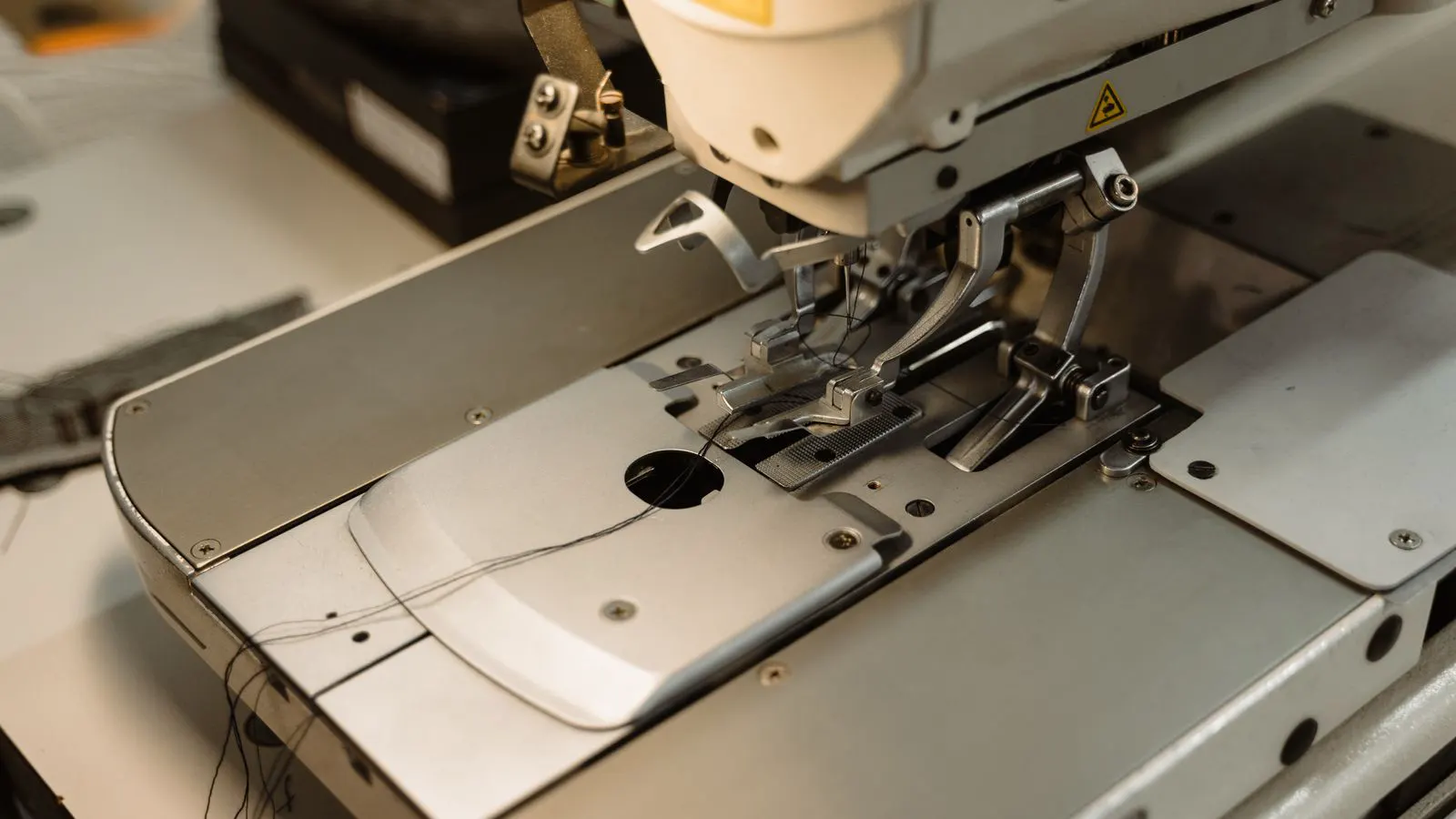
The needle plate is the first differentiator. Denim machines use thicker needle plates, often with reinforced holes around the needle. This prevents the plate from wearing through when the needle strikes it thousands of times per hour. Standard plates thin out quickly under denim load.
Thread tension systems must also be upgraded. Denim requires stronger tension to pull thread through thick layers without looping on the underside. The tension discs and spring mechanisms need to handle higher force without slipping.
Motor power matters as well. Denim is dense. A machine with insufficient motor torque will slow down or stall when pushing thick seams. Procurement teams should verify motor specifications against expected fabric weights and seam thickness.
How to Evaluate Machine Durability
Durability is the core concern in industrial sewing machine selection for denim. A machine that breaks down on the first production week creates immediate problems.
Evaluate the needle bar and presser foot assembly. These components contact the fabric directly and experience the highest wear. Look for machines with hardened steel components and replaceable parts that are available through established distributors.
Check the hook assembly. The hook catches the bobbin thread to form the lockstitch. In denim applications, the hook experiences heavy impact forces. A weak hook breaks easily and ruins stitches.
The feed dogs and presser foot pressure are critical. Denim requires firm, consistent feed to prevent fabric shifting. Adjustable presser foot pressure allows operators to fine-tune the machine for different denim weights. Fixed pressure systems limit flexibility.
Maintenance access is another durability factor. Machines with easy-to-reach internal components reduce changeover time. A machine that takes an hour to service between shifts creates a hidden cost.
Thread Tension and Stitch Quality Control
Thread tension determines stitch consistency. In denim, inconsistent tension causes visible defects. The top thread may loop on the underside. The bobbin thread may show on the top surface. Both defects create rejection rates and rework.
Modern denim sewing machines offer adjustable tension at multiple points. The top tension disc, the needle clamp, and the bobbin case all affect final stitch quality. Operators need to adjust these settings based on thread type, fabric weight, and seam position.
Test the machine with the actual thread used in production. Denim often uses thicker thread, sometimes with a cotton core and synthetic wrap. The machine must handle this thread without damaging the tension discs.
Run a test seam on representative denim fabric. Inspect the seam from both sides. Check for skipped stitches, thread breaks, and uneven density. A machine that passes the test on a sample but fails on the production floor indicates a mismatch between specifications and actual use.
Production Capacity and Throughput
Throughput is a procurement metric. It measures how many units a machine can produce per hour. For denim, throughput depends on seam type, fabric thickness, and operator skill.
Jeans production involves multiple seams. Each seam requires a different stitch pattern and tension setting. A single machine cannot handle all seam types at maximum speed. Procurement teams should map the production process before selecting machines.
Walking foot mechanisms help with thick fabric layers. They grip the top and bottom fabric simultaneously, preventing shifting. This is useful for double layers or seams with interfacing. However, walking foot machines are slower than standard lockstitch machines.
Flatbed sewing machines offer a different approach. They provide a stable, flat surface for thick fabric. Operators can guide the fabric more easily. The trade-off is speed. Flatbed machines are slower but produce cleaner seams on complex denim constructions.
For high-volume production, consider both machine types. Use walking foot machines for standard seams. Use flatbed machines for complex seams. This combination balances speed and quality.
Electrical Power and Line Integration
New sewing lines require verification of electrical power requirements. Denim machines draw significant current, especially during startup. A machine that runs smoothly at 220V may stall if the power supply cannot handle the inrush current.
Check the power supply capacity of the sewing room. Multiple machines on the same circuit create voltage drop. Voltage drop causes motor speed fluctuations and stitch quality issues. Procurement should work with the electrical team to verify circuit capacity.
Line integration affects machine selection. If the sewing room already uses a specific control system, machine compatibility becomes a factor. Some machines integrate with production monitoring systems that track stitch count, downtime, and operator performance.
Cable management and machine footprint also matter. Denim machines are often larger than standard lockstitch machines. They require more floor space and different cable routing. Measure the available floor space before finalizing machine placement.
Comparison of Machine Types for Denim
| Criterion | What to look for | Why it matters |
|---|---|---|
| Needle plate thickness | Reinforced steel plate with large needle holes | Prevents plate wear and needle breakage under heavy fabric load |
| Thread tension system | Adjustable multi-point tension with hardened discs | Maintains stitch consistency and prevents thread looping |
| Motor power | High torque motor rated for heavy fabric | Prevents stalling and maintains production speed |
| Presser foot pressure | Adjustable pressure with hardened foot | Provides firm feed without damaging fabric surface |
| Hook assembly | High-impact hook with replaceable parts | Ensures reliable lockstitch formation and reduces downtime |
| Feed mechanism | Walking foot or flatbed option | Controls thick fabric layers and prevents shifting |
The table above summarizes the core evaluation criteria. Each criterion affects a different aspect of machine performance. Needle plate thickness affects longevity. Thread tension affects quality. Motor power affects speed. Presser foot pressure affects fabric handling. Hook assembly affects stitch formation. Feed mechanism affects fabric control.
No single machine excels at every criterion. Procurement teams must prioritize based on production volume, fabric type, and budget. A machine with a superior needle plate but weak motor power will still stall during heavy production.
Decision Checklist for Procurement
Before placing an order, use the following checklist to verify machine selection.
- Verify the machine is rated for the specific denim fabric weight and thickness used in production.
- Test the machine with the actual thread type and fabric sample.
- Confirm the needle plate, hook, and tension discs are replaceable and available through the supplier.
- Check motor power specifications against the sewing room electrical capacity.
- Evaluate maintenance access and average service time for the selected model.
- Map the production process to determine if multiple machine types are needed.
- Confirm the machine footprint fits the existing sewing line layout.
- Review the supplier’s warranty terms and support response time.
- Verify the machine integrates with any existing production monitoring systems.
- Run a small production trial before committing to a full line.
This checklist moves selection from guesswork to verification. Each item addresses a specific risk. The denim sewing machine must handle the fabric, the thread, and the production environment. If any element fails, the machine will underperform.
The right machine selection reduces defects, extends component life, and stabilizes production speed. Procurement teams that verify these factors before purchase avoid the costly cycle of replacement and rework. Denim production is unforgiving. The machine must be built for the job.
Frequently asked questions
What thread type works best for denim sewing machines?
Denim production typically uses thicker thread with a cotton core and synthetic wrap. The machine must handle this thread without damaging tension discs. Test the machine with the actual thread used in production.
How do I know if a standard lockstitch machine can handle denim?
A standard lockstitch machine may handle light denim if the needle plate and tension system are upgraded. Heavy denim requires a dedicated machine with reinforced components. Test with representative fabric before committing.
What is the difference between walking foot and flatbed machines for denim?
Walking foot machines grip both fabric layers for better control but run slower. Flatbed machines provide a stable surface for complex seams but also run slower. High-volume production may require both types.
How often should I replace the needle on a denim sewing machine?
Needles break faster on denim than on light fabric. Replace needles based on visible wear, breakage frequency, and stitch quality. Do not wait for a needle to break completely. A worn needle damages the fabric.
What should I do if the machine is breaking threads constantly?
Check thread tension, needle condition, and hook alignment. Thread breakage usually indicates a mismatch between thread tension and fabric thickness. Adjust tension gradually and test with a sample seam.