Buying Guide: Circular Knitting Machine Components
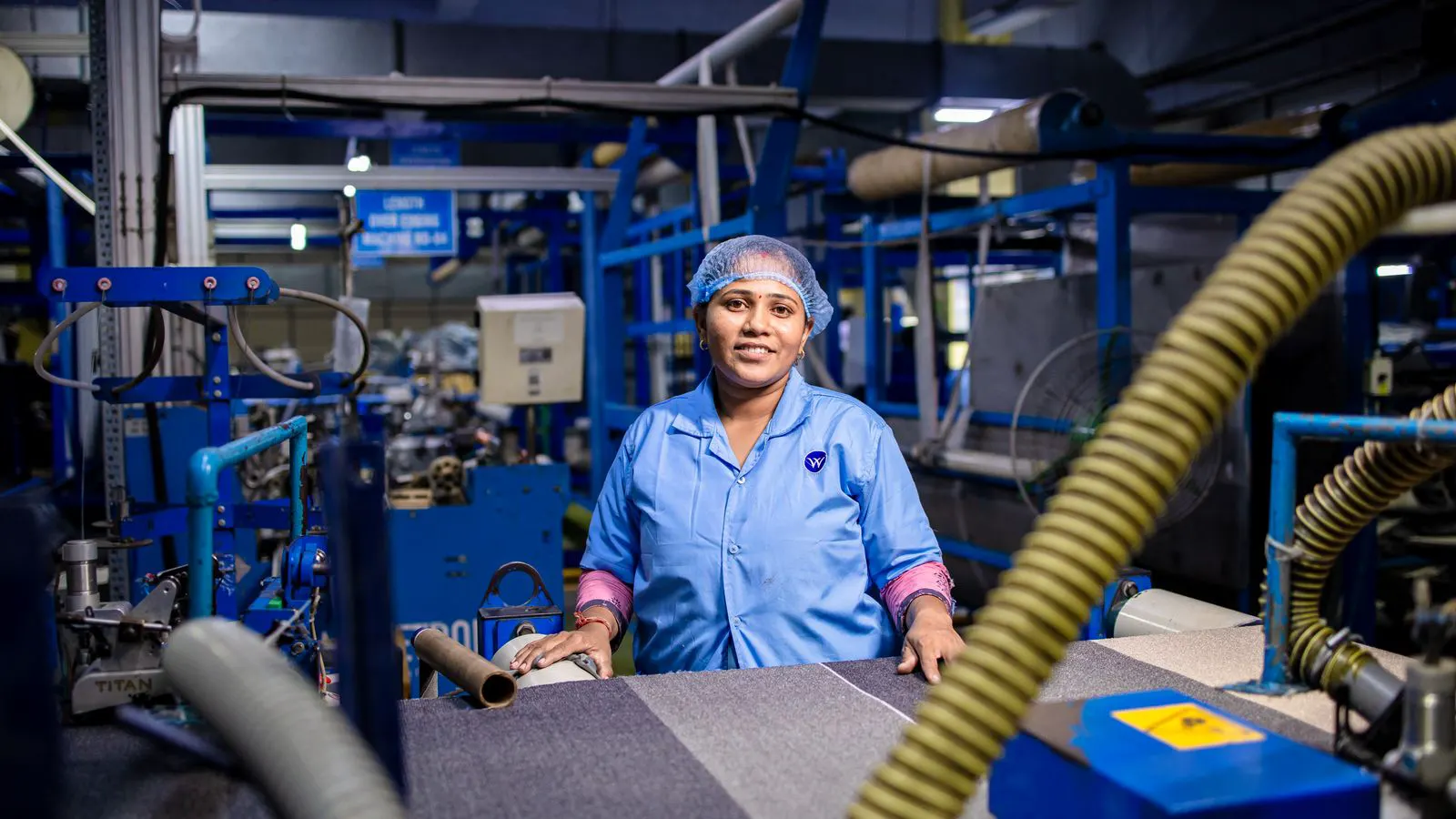
Evaluate the needle bed, carriage, feeders, and tension system before buying a circular knitting machine. This guide outlines specific criteria for checking these components, ensuring the machine will deliver the fabric quality and reliability your production line requires.
- Inspect the needle bed for consistent height and even spacing to ensure stable stitch formation.
- Check the carriage and feeders for wear on moving parts that affect yarn tension and speed.
- Verify the tension system allows precise adjustment for different yarn weights and fabric structures.
- Prioritize component availability and supplier support to minimize production downtime.
What to check in the needle bed
The needle bed is the heart of a circular knitting machine. It holds all the knitting needles that form the fabric. If the bed is uneven or damaged, the stitch loop will be irregular, leading to off-knit fabric and high waste.
Look at the bed in three ways. First, check the height of each needle. The needles should be perfectly level. A single needle that sits even a fraction of a millimeter lower or higher than its neighbors will cause a dropped stitch. Run your hand slowly along the bed. You should feel no bumps or dips. Second, check the spacing between the needles. The gaps must be consistent. Uneven spacing causes the yarn to twist or slacken as it passes through the machine, creating a loose or tight area in the fabric. Third, inspect the needle hooks. The small hook at the tip of each needle catches the loop of yarn. If a hook is bent, worn, or dull, it will not grip the yarn correctly. This results in broken stitches or a weak point in the fabric.
When evaluating a machine, ask the supplier to demonstrate the needle bed under load. Watch how the needles move as the carriage passes. They should move in perfect unison. If you see lagging or hesitation, the bed is not true. A new bed is expensive to replace. A used bed is harder to repair. The bed you buy determines the quality of every meter of fabric the machine will produce.
How the carriage affects fabric quality
The carriage carries the yarn feeders and tension devices around the needle bed. It is the moving part that creates the stitch. The carriage must be heavy enough to apply even pressure on the needles but light enough to move smoothly at high speed.
Inspect the carriage frame. Look for cracks or warping. A warped frame will not sit flat on the bed. This creates uneven pressure on the needles. The fabric will have a visible line where the pressure changes. Check the bearings and gears inside the carriage. These parts transfer the rotation from the main drive to the feeders. If the gears are worn, the yarn feed will be inconsistent. One stitch will pull more yarn than the next. This creates a ripply fabric surface.
Pay close attention to the yarn feeders. These are the small arms that hold the yarn as it passes through the machine. They must have a precise channel for the yarn to slide through. A worn channel changes the angle at which the yarn enters the needle. This alters the tension. You will see this as a slight pucker or ripple in the fabric. Ask the supplier to show you the feeder channel. If it is worn, the tension will fluctuate during the knit. A consistent channel ensures the yarn is fed with the same force every time.
The tension system and its role in fabric weight
Tension controls how tight the yarn is held while the stitch is formed. It directly affects the weight and density of the fabric. A machine with poor tension control will produce fabric that is too loose, too tight, or both in different places.
Look at the tension discs or bands. These are the parts that grip the yarn. They must be made of a material that is hard enough to not deform but soft enough to grip the yarn without cutting it. Check the adjustment mechanism. It must be smooth and precise. If the adjustment is stiff, you cannot fine-tune the tension. If it is loose, the tension will drift during production.
The tension system must work with the type of yarn you plan to knit. A cotton yarn needs a different tension setting than a wool yarn. A synthetic yarn behaves differently still. A good tension system allows for quick changes. It should also allow for different tension on the warp and weft if you are knitting complex structures. Ask the supplier to run a sample of your specific yarn on the machine. Watch how the tension responds. If the fabric weight changes as the machine runs, the tension system is not stable.
Drive and motor specifications
The drive system powers the carriage and feeds the yarn. It determines the speed and stability of the machine. A weak drive will struggle at high speeds. A strong drive with poor control will cause vibration.
Check the motor rating. It must match the power requirement of the machine at its target speed. A motor that is under-rated will overheat and shut down. A motor that is over-sized is not a problem, but it may be more expensive to run and maintain. Look at the coupling between the motor and the drive shaft. It must be aligned perfectly. Misalignment causes vibration. Vibration travels through the frame and into the needles. This stresses the needles and can cause them to break.
Inspect the belts and pulleys if the machine uses a belt drive. The belts must be of high quality. They should not be cracked or glazed. A glazed belt will slip under load. This causes speed fluctuations. The fabric will have a loose area where the speed drops and a tight area where the speed catches up. If the machine uses a direct drive, check the gear ratio. The gear must be meshed correctly. If the teeth are worn, the drive will be noisy and inefficient.
Component availability and supplier support
A machine is only as good as the parts that keep it running. When you buy a machine, you are also buying a supply chain. If a part breaks, you need it quickly. If the supplier does not have it, your production stops.
Ask the supplier about the parts list. Which components are standard, and which are custom? Standard parts are easier to find. Custom parts must be ordered from the manufacturer. This can take weeks. Ask about the lead time for common wear parts. The needles, for example, wear out. How quickly can you get a full set of new needles? If the answer is “we will check,” that is a red flag.
Check the service agreement. What is covered? How fast will a technician come if the machine breaks down? A machine that is down for three days costs money. A machine that is down for three weeks costs the business. The support plan must match your production schedule. If you run 24 hours a day, you need 24-hour support. If you run one shift, you can accept next-day support. The cost of the machine is only the first part of the cost of ownership. The cost of downtime is the part that eats your profit.
Criteria for choosing the right machine
Use the criteria below to evaluate any circular knitting machine offer. Compare each component against your production needs. Do not buy on price alone. A cheap machine with poor components will cost more in repairs and bad fabric.
| Criterion | What to look for | Why it matters |
|---|---|---|
| Needle Bed Quality | Uniform needle height, even spacing, sharp hooks | Prevents dropped stitches and fabric flaws |
| Carriage Condition | Straight frame, smooth bearings, precise feeders | Ensures even pressure and consistent yarn feed |
| Tension System | Smooth adjustment, non-worn discs, yarn compatible | Controls fabric weight and density |
| Drive System | Correct motor power, aligned coupling, good belts | Maintains speed and prevents vibration |
| Parts Availability | Standard parts, short lead times, clear service plan | Minimizes production downtime |
A practical decision checklist
Before you sign the purchase order, run through this checklist. It will help you catch issues that are easy to miss during a sales visit.
- Verify the needle bed. Ask for a measurement of the needle height variation across the entire bed. A tolerance of less than one millimeter is good. Ask for a sample of the fabric knit on that specific bed.
- Test the carriage. Watch the carriage run at full speed for ten minutes. Listen for grinding. Look for vibration. Check the feeder channels with a light.
- Check the tension. Run your specific yarn for one hour. Measure the fabric weight at the start and end of the run. The difference should be minimal.
- Inspect the drive. Check the motor temperature after the test run. Check the belt tension. Listen for noise from the gears.
- Confirm parts support. Get the parts list in writing. Get the lead times in writing. Get the service response time in writing.
- Review the warranty. Read the fine print. What is excluded? How are disputes handled?
A machine is a tool. It will wear out. You are buying a tool that will serve you for years. The quality of the components determines how long that service lasts and how good the fabric will be. Buy the components first. The rest follows.
Frequently asked questions
What is the most common failure point in a circular knitting machine?
Worn needle hooks are the most common failure point. They bend or dull from friction with the yarn. This causes dropped stitches and weak fabric.
Can I use a machine with a used needle bed?
Yes, but only if the bed is in excellent condition. An uneven bed cannot be fixed. If the bed is true and the needles are sharp, a used bed is a good option.
How do I know if the tension system is good?
Run your specific yarn for a set time. If the fabric weight changes, the tension is not stable. A good system holds a constant weight.
Is a higher speed always better?
No. Speed is limited by the quality of the components. A machine with poor feeders cannot run fast without breaking the yarn. Buy for your fabric type, not for maximum speed.
What should I do if the supplier cannot provide parts quickly?
Do not buy that machine. Production downtime is expensive. Find a supplier who can guarantee parts availability and service response time.