Comparison: Manual vs Automated Cutting Tables for Garments
A cutting table comparison shows that automated systems typically deliver higher garment throughput and lower scrap reduction costs, while manual tables remain viable for low-volume, high-variety runs. The choice depends on volume consistency, fabric types, and budget.
- Automated cutting tables prioritize speed and pattern accuracy, reducing labor hours per roll.
- Manual cutting relies on operator skill, making it sensitive to fatigue and process errors.
- Scrap reduction is a primary financial driver in automated systems due to precise nest placement.
- Manual setups suit small batches and complex, irregular garment styles where re-runs are frequent.
- Financial analysis must account for maintenance, software licensing, and operator training costs.
How Manual and Automated Tables Differ in Operation
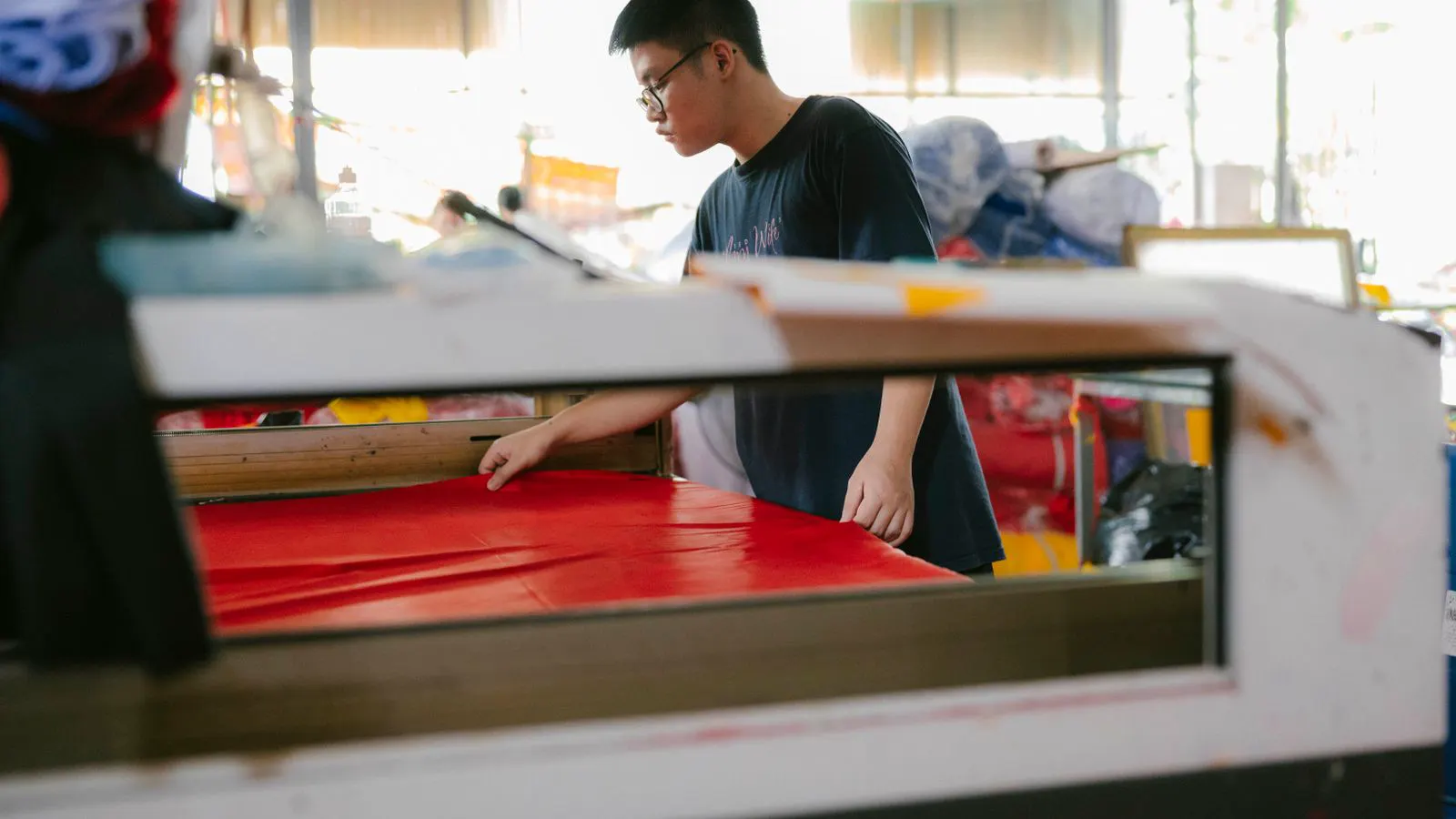
Manual cutting tables are flat workbenches where operators lay out fabric, trace patterns, and cut with rotary blades or scissors. The process is linear. Each style requires a separate setup. Operators manage fabric tension, pattern alignment, and blade pressure. This method suits small batches, sample production, and complex garments where each piece requires individual attention.
In a typical manual setup, the operator places paper or digital pattern pieces onto the fabric roll. They check the grainline against the selvedge to ensure the fabric runs straight. They check the repeat alignment if the fabric has a print. The operator then traces the pattern with a marker or chalk and cuts along the lines. A rotary blade is common for straight lines, while hand shears are used for tight curves. The operator must keep the fabric flat and taut. If the fabric shifts, the cut piece will be distorted. The operator then stacks the cut pieces into bundles, checks the count, and moves to the next roll. The pace is steady but limited by human speed.
Automated cutting tables use computerized plotting and cutting heads. Software calculates the best pattern layout, or nesting, for each fabric roll. The table moves the fabric or the blade to cut multiple pieces simultaneously. Throughput is higher because the machine handles the physical labor. The operator focuses on loading fabric and monitoring the process.
An automated system usually features a long bed with rails and a gantry that holds the cutting head. The head contains a high-speed rotary blade or a laser. The software sends coordinates to the machine, telling it where to move. The machine cuts a full set of pieces in minutes. The operator loads the fabric roll, calibrates the tension, and starts the job. The machine handles the rest. The operator monitors the screen for errors and manages the offcut pile. The shift is less physically demanding but requires constant attention to the software interface.
The core difference is control. Manual cutting depends on human judgment for every cut. Automated cutting depends on software algorithms and mechanical precision. This shift changes the cost structure, the skill requirements, and the waste profile of the cutting room.
Garment Throughput Under Different Production Volumes
Garment throughput is the number of pieces cut per hour or per shift. Manual tables can cut a decent number of pieces, but the speed plateaus. An operator can only work with one or two hands. If the table is large, moving the fabric takes time. If the patterns are complex, tracing and cutting take longer.
Consider a production run of 10,000 basic t-shirts. The pattern has eight pieces per shirt: front, back, sleeve, collar, and cuff. A manual operator might cut 20 to 30 shirts per hour. With eight pieces per shirt, that is 160 to 240 pieces per hour. The operator spends time stacking, counting, and moving the fabric. The pace slows as the operator tires.
Automated tables handle continuous motion. The cutting head moves at a fixed speed. Multiple heads can cut at once. This allows a single machine to process a full roll of fabric in a fraction of the time a manual team would take. For high-volume production runs, such as basic tees or uniform shirts, the throughput gap is significant.
An automated machine might process the same 10,000 shirts in a few hours. The cutting head moves at a consistent speed, often measured in meters per minute. The software calculates the path to minimize head movement. The machine cuts multiple layers of fabric at once, provided the fabric is stable. The operator loads the roll, checks the tension, and watches the machine work. The output is consistent and high.
However, throughput is not just about speed. It is about consistency. Manual cutting can slow down if the operator is tired, the fabric is difficult to handle, or the patterns are dense. Automated cutting maintains a consistent rate as long as the fabric feeds correctly. For factories running multiple shifts, the automated option reduces the variability in output.
Variability matters for planning. If a factory promises a delivery date, it needs a predictable output. Manual cutting has more variance. A new operator might be slower than a veteran. A difficult fabric might cause delays. Automated cutting has less variance. The machine cuts at the same speed every shift. The only variable is the fabric behavior. If the fabric feeds correctly, the output is stable. This stability helps with scheduling and inventory management.
Scrap Reduction and Fabric Efficiency
Scrap reduction is a direct cost saver. In manual cutting, waste comes from two sources. The first is off-pattern cuts. The second is the “offcut,” which is the fabric left over at the ends of the roll after the last pattern is placed.
Manual operators try to minimize waste by fitting patterns closely. But human eyes miss small gaps. They may leave space for safety. They may not align patterns perfectly. This leads to a higher percentage of fabric left unused.
In a manual setup, the operator places patterns with a small margin between them. This margin accounts for potential slippage. It also accounts for the thickness of the blade. If the operator is too close, the blade might cut into the next piece. If the fabric shifts during cutting, the pieces will be misaligned. The operator sacrifices fabric safety for accuracy. The result is a higher waste rate. The offcut at the end of the roll is also larger because the operator cannot fit patterns into tight spaces at the selvedge or the roll end.
Automated nesting software calculates the most efficient layout. It accounts for fabric grain, stretch, and pattern repeats. It places patterns to minimize gaps. The result is a higher percentage of the roll used for actual garment pieces. For high-value fabrics, this reduction in scrap can offset a large portion of the machine’s cost.
The software uses algorithms to find the best arrangement. It considers the shape of each piece, the direction of the grain, and the repeat. It can rotate pieces if the pattern allows. It can place pieces in different orientations to fill gaps. The software outputs a cutting plan that the machine follows. The waste is calculated in the software before cutting begins. The operator can see the estimated waste percentage. This allows for better budgeting and material planning.
The trade-off is complexity. If a garment style has many variations or if the fabric has a complex print, the software may not optimize as well as a skilled operator might. In these cases, manual cutting might actually yield less waste. The software is best for standard, repeatable patterns. For example, a basic tee with a simple print is easy for software to optimize. A complex dress with many curved pieces and a directional print is harder. The software might leave more waste than an experienced operator who knows how to fit the pieces by hand.
Labor, Training, and Maintenance Costs
Manual cutting requires skilled labor. The operator must know fabric types, pattern layout, and blade care. Training takes weeks. Skilled cutters are hard to find in many regions. Wages for skilled labor are often higher than for machine operators.
A skilled manual cutter develops an eye for fabric behavior. They know how cotton, polyester, and blends move. They know how to adjust tension for different weights. They know how to cut tight curves without tearing the fabric. This knowledge takes time to develop. A new operator might take a month to reach a competent level. A veteran operator can work faster and with less waste. The factory must pay for this skill.
Automated cutting changes the labor profile. The operator does not need to be a master cutter. They need to understand basic machine operation, fabric loading, and software interfaces. Training is shorter. The role is more about monitoring and troubleshooting.
An automated cutting operator learns to load the fabric roll, check the tension, and monitor the cutting process. They learn to identify errors in the software and adjust settings if needed. They learn to clean the blade and maintain the table surface. The training might take a few days. The operator does not need to trace patterns or cut by hand. They need to manage the machine. This broadens the pool of available workers. A factory can train a general machine operator to run the cutting table.
Maintenance is a major factor. Manual tables require blade replacement and table surface care. The costs are low and predictable. Automated tables have moving parts, sensors, and software. They require regular maintenance, software updates, and technical support. Downtime is more costly because the entire production line may stop.
Manual table maintenance is simple. The operator cleans the table, replaces the blade if it is dull, and checks the tension. The blade is a low-cost item. The table surface is durable. The machine is reliable. There are few moving parts. The risk of breakdown is low.
Automated table maintenance is more complex. The machine has motors, servos, sensors, and a control system. The blade must be sharp and aligned. The table surface must be clean and free of debris. The software must be updated regularly. The machine requires professional service intervals. If a sensor fails, the machine stops. If a software update goes wrong, the machine may not cut correctly. The factory must budget for technical support. The downtime cost is higher because the machine is a capital asset.
A factory must budget for these differences. The purchase price of an automated table is higher, but the labor cost per piece is lower. The maintenance budget is larger, but the output per shift is much higher. The factory must calculate the total cost of ownership, not just the purchase price.
When to Pick Each Option
The decision between manual and automated cutting depends on production volume and product type.
- High-volume, standard styles: Automated cutting is the clear choice. The throughput gain and scrap reduction pay for the machine. Basic garments, uniform pieces, and high-turnover styles favor automation.
- Low-volume, high-variety: Manual cutting is often better. If the factory runs small batches of custom garments, the setup time for automated software may exceed the benefit. Manual cutting allows quick changes and flexibility.
- Complex fabric types: Some fabrics are difficult for automated machines. Stretchy knits, delicate silks, or heavily textured fabrics can slip or tear. Manual operators can handle these with care. Automated systems may struggle without special attachments or software adjustments.
- Budget constraints: If capital is limited, manual cutting is the lower barrier to entry. The cost is mostly labor. If the factory has the capital, automated cutting offers better long-term ROI.
- Space limitations: Manual tables are smaller. Automated tables often require more floor space for fabric loading and offloading. In tight facilities, the footprint matters.
For high-volume standard styles, the math is straightforward. The factory cuts the same shirt every day. The pattern is fixed. The fabric is consistent. The automated machine runs continuously. The scrap is low. The labor is minimal. The cost per piece drops.
For low-volume high-variety, the manual option wins on flexibility. The factory cuts a dress for one customer today and a jacket for another tomorrow. The patterns are different. The fabrics are different. The manual operator can switch quickly. The automated software requires time to set up the new pattern. The setup time eats into the profit.
For complex fabrics, the manual option provides control. Stretchy knits move under the blade. The operator can hold the fabric steady. The automated machine might pull the fabric, causing distortion. Delicate silks tear easily. The operator can cut with care. The automated machine might damage the fabric.
For budget constraints, manual cutting is the safe bet. The factory does not need to invest in a large machine. It can start with a small table and add more as volume grows. The risk is lower.
For space limitations, manual tables fit in tight rooms. Automated tables need room for the fabric roll, the cutting bed, and the offcut pile. The factory must plan the layout carefully.
Financial Analysis: What to Look For
A proper financial analysis must look beyond the purchase price. Calculate the cost per piece cut. Include labor, electricity, maintenance, and fabric waste.
For a manual setup, the cost per piece is higher due to labor and waste. But the initial capital outlay is low. The risk is lower.
For a manual setup, the factory pays for the table, the blade, and the labor. The labor cost is a variable cost. It increases with volume. The waste cost is also a variable cost. It increases with volume. The fixed costs are low. The table is a simple asset. The depreciation is low.
For an automated setup, the cost per piece is lower. The initial outlay is high. The risk is higher. The factory must ensure it has enough volume to keep the machine running. If the machine sits idle for a few weeks, the ROI drops significantly.
For an automated setup, the factory pays for the machine, the software, the installation, and the training. The labor cost is lower. One operator can manage multiple machines. The waste cost is lower. The fixed costs are higher. The machine depreciates over time. The software requires updates. The maintenance contract is a fixed cost.
Consider the lead time. Automated systems take longer to install and calibrate. Manual tables are ready to use immediately. If a factory needs to start production now, manual is faster. If the factory has a six-month ramp-up, automated is a better fit.
The factory must also consider the cash flow. The manual setup requires less upfront capital. The factory can keep the cash for other uses. The automated setup requires a large upfront investment. The factory may need a loan. The loan adds interest costs. The factory must ensure it can service the loan.
Common Mistakes in Cutting Table Selection
Factories often make two mistakes. The first is buying automated equipment for low volume. The machine does not run enough to justify the cost. The second is staying manual too long. As volume grows, the labor cost becomes unmanageable. The factory loses money on every shift because the team cannot keep up.
Buying automated equipment for low volume is a common error. The factory sees the speed and efficiency and assumes it is worth the cost. But if the volume is low, the machine sits idle. The fixed costs are high. The labor savings are minimal. The factory loses money.
Staying manual too long is also a common error. The factory starts with low volume and uses manual cutting. As volume grows, the manual team struggles. The labor cost rises. The waste rises. The factory does not upgrade because the manual setup is still working. But the margin is shrinking. The factory must upgrade to keep the margin.
Another mistake is ignoring software. The machine is only half the value. The nesting software determines the waste rate. A good machine with poor software yields poor results. A factory should evaluate the software before buying the hardware.
The software is the brain of the automated system. It calculates the layout. It determines the waste. If the software is weak, the waste is high. The factory must test the software with its own patterns. It must see the waste percentage. It must see how the software handles its specific fabrics and patterns.
Finally, do not underestimate training. A new operator on an automated table needs time to learn. If the factory does not train properly, errors will occur. Fabric will be wasted. The machine will be damaged. Invest in training from day one.
The training must cover the machine operation, the software, and the troubleshooting. The operator must know how to load the fabric. The operator must know how to adjust the tension. The operator must know how to identify errors. The factory must provide ongoing training. The operator must stay current with software updates.
Cutting Table Comparison
| Option | Best for | Limitations |
|---|---|---|
| Manual Cutting Table | Small batches, samples, complex fabrics, low volume | Low throughput, high labor cost, higher scrap, skill dependent |
| Automated Cutting Table | High volume, standard styles, large fabric rolls | High initial cost, complex maintenance, software dependency, larger footprint |
| Hybrid Approach | Mixed production, variable volume, multi-facility | Requires careful process management, higher complexity, potential for workflow bottlenecks |
| Semi-Automated Systems | Mid-range volumes, specific fabric types, limited budget | Slower than full automation, less flexible than manual, intermediate cost |
Frequently asked questions
How long does it take to train an operator on an automated cutting table?
Training typically takes a few days to a few weeks. Basic operation can be learned quickly, but mastering fabric handling and troubleshooting takes longer. The time depends on the operator's prior experience.
Can automated cutting tables handle knitted fabrics?
Yes, but with care. Knitted fabrics stretch and can shift. Automated systems require proper tension control and sometimes special attachments. Manual operators often have more control over delicate knits.
What is the biggest cost driver in manual cutting?
Labor is the main cost. Skilled cutters are expensive. If the factory has low volume, the labor cost per piece is high. This makes manual cutting less profitable for large orders.
How much space does an automated cutting table need?
It needs more space than a manual table. The machine itself is large, and it needs room for fabric rolls and offcut removal. A factory should measure the floor before ordering the equipment.
Is automated cutting worth it for a factory with 10,000 pieces per month?
It depends on the style and fabric. If the pieces are standard and the volume is consistent, automation may pay off. If the pieces are complex or the volume fluctuates, manual might be better. Calculate the cost per piece to decide.