Outlook: Spinning Machine IoT Adoption in 2026
Procurement managers should expect tighter sensor integration, predictive maintenance, and standardized data protocols in spinning equipment. This outlook outlines five key shifts and preparation steps for smart mill upgrades.
- Spinning machine IoT adoption in 2026 centers on predictive maintenance, real-time yarn quality monitoring, and standardized data protocols that reduce unplanned downtime.
- Buyers should prioritize sensor placement near critical wear points and verify data integration with existing mill systems before committing to smart mill upgrades.
- Textile automation in spinning rooms is shifting from isolated machine controls to connected ecosystems that feed production, quality, and energy management platforms.
- Preparation includes auditing existing machine architecture, defining clear data ownership, and planning phased rollouts rather than full simultaneous conversion.
- Spinning efficiency gains come from early detection of yarn defects, tension anomalies, and component wear through continuous sensor feedback.
Spinning machine IoT adoption has moved from pilot projects to production floor standards. By 2026, procurement decisions increasingly hinge on how well spinning equipment supports continuous data capture, not just mechanical performance.
What is changing in spinning machine sensor integration
The shift is moving from basic status monitoring to condition-based sensing. Older installations tracked speed, motor load, and temperature. Today’s systems add proximity sensors near yarn paths, vibration sensors on drive shafts, and acoustic monitoring on bobbin winders.
The practical difference shows up in maintenance windows. A vibration spike near a flyer or a tension variance on a twist zone can trigger an alert before a broken yarn or a misaligned part causes a full stop. Procurement teams should ask vendors to map exactly where each sensor sits and what it measures.
Sensor placement matters more than sensor count. A mill with twenty well-placed sensors that track critical wear points will outperform one with fifty redundant sensors on non-critical areas. The goal is to reduce mean time to repair, not to fill a dashboard with redundant data streams.
How predictive maintenance is reshaping spinning efficiency
Predictive maintenance is the fastest path to measurable spinning efficiency gains. When a machine reports a pattern of increasing motor current over several hours, the system can schedule a bearing inspection before failure. That inspection costs a few hours of production. A failure costs a shift of downtime and possibly a yarn lot rejection.
The data model behind this is simple but effective. Baselines are learned during stable production. Deviations are flagged when they exceed defined thresholds. The threshold setting is where many mills stumble. Set too tight, operators ignore alerts. Set too loose, alerts arrive after damage has already occurred.
Buyers should require a demonstration of the alerting logic. Show a vendor how it distinguishes a normal bobbin change from a bearing fault. Ask how false positives are handled and how often the baseline re-trains. A spinning machine IoT system that constantly cries wolf will not survive a real production floor.
What smart mill architecture requires
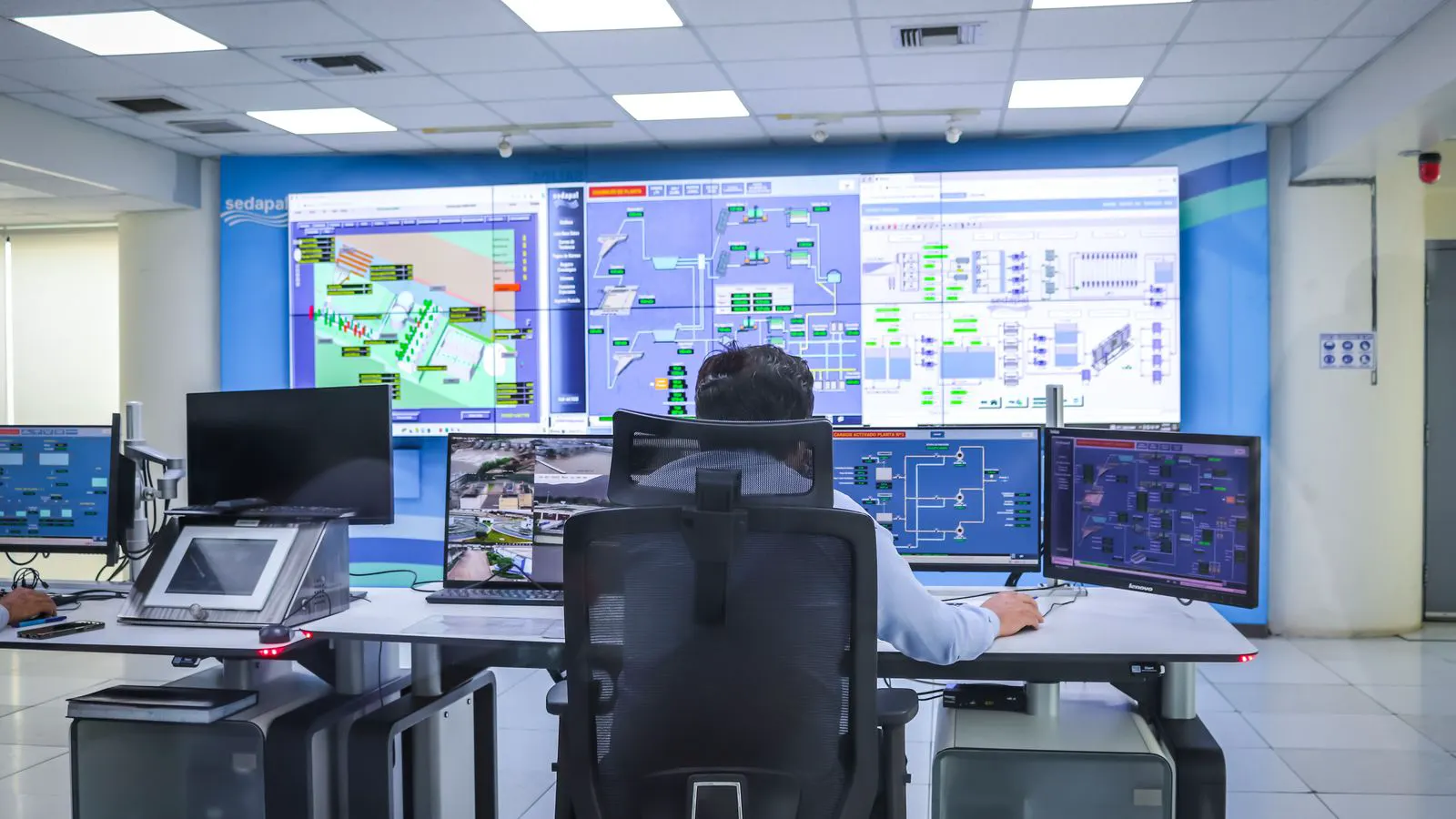
A smart mill is not a spinning machine with a screen attached. It is a connected environment where spinning, weaving, and finishing data feed a shared production model. The spinning frame reports yarn count, twist, and tension. The loom reports warp tension and shed timing. The quality lab reports defect rates. When these streams align, operators see the full value chain, not isolated machine states.
The integration layer is where most projects fail. Vendors sell the spinning machine IoT hardware. They do not always own the data pipeline. Procurement managers need to confirm who owns the data format, who maintains the middleware, and what happens if one system goes offline.
A practical test is to ask for a data dictionary. Every field should have a definition, a unit, a update frequency, and a source point. Without this, the smart mill becomes a collection of dashboards that tell operators contradictory stories.
Which sensor types to prioritize first
Not every sensor earns its place on the floor. The highest-impact sensors target the failure modes that cost the most money.
| Sensor type | Typical location | What it detects | Maintenance impact |
|---|---|---|---|
| Vibration | Drive shaft, flyer, tension drum | Bearing wear, misalignment, imbalance | Prevents catastrophic drive failure |
| Tension | Twist zone, take-up, bobbin winding | Yarn breaks, uneven twist, bobbin fill issues | Reduces stoppages and yarn defects |
| Acoustic | Spindle area, winding head | Friction, slippage, early mechanical wear | Catches wear before it becomes failure |
| Temperature | Motor, gearbox, tension drum | Overheating, lubrication failure | Prevents thermal damage and downtime |
| Proximity | Bobbin changer, yarn path | Misfeed, jam, misalignment | Reduces operator intervention time |
The first three categories usually deliver the fastest return. Vibration and tension data cover the majority of unplanned stops in most spinning environments. Acoustic monitoring adds early warning but requires clean acoustic baselines. Temperature and proximity sensors are valuable but often secondary to the first three.
How to prepare your mill for phased rollout
A phased rollout protects production and spreads capital risk. The first phase should cover a single line or a small cluster of machines. The second phase adds weaving and quality data. The third phase connects the full mill to an enterprise planning system.
Before any hardware arrives, audit the existing machine architecture. Confirm that the drive systems have spare capacity for additional sensors. Check that the control cabinets can house the new communication modules. Verify that the electrical grounding meets the specifications for the new sensors.
Define data ownership before the first sensor is installed. Who sees the data? Who acts on it? Who is responsible when an alert is wrong? These questions are easier to answer before the system is live. They are harder after the floor is under pressure to produce.
What procurement specifications should include
A good specification does not just list sensors. It defines performance requirements and integration obligations.
- Sensor coverage must include at least vibration, tension, and temperature monitoring on all critical rotating components.
- Data update frequency must support real-time alerting on the production floor, not just end-of-shift reporting.
- The system must support standard industrial communication protocols so it can integrate with existing mill systems without vendor lock-in.
- The vendor must provide a data dictionary with field definitions, units, and source points for every data stream.
- The system must demonstrate false positive rates under normal production conditions before the final acceptance test.
- Maintenance access must be designed so that sensor replacement does not require full machine shutdown.
These requirements separate a genuine smart mill solution from a demo-grade installation. The final acceptance test is where the real value shows. If the system cannot hold up under a week of normal production, it will not survive a month.
How this affects 2026 purchasing decisions
The purchasing question is no longer whether to install sensors. It is how well the sensors integrate with the rest of the mill. A spinning machine IoT package that cannot share data with the weaving floor is a closed system. It gives operators useful information but does not improve mill-wide coordination.
The mills that gain the most are those that treat the spinning machine as one node in a connected process. The data from the spinning frame informs loom settings. The loom data informs quality adjustments. The quality data informs spinning parameter changes. This loop is where real spinning efficiency gains come from.
Procurement managers should also factor in operator training. A new sensor system changes the daily routine. Operators must know what the alerts mean and what the standard response is. A system that generates data without trained eyes on the data is just noise.
Final planning notes
The path from current installations to a fully connected spinning environment is incremental. Start with the sensors that prevent the most expensive failures. Build the data pipeline before expanding the sensor count. Verify integration with the rest of the mill before signing long-term service contracts. The goal is a floor where every machine tells the truth about its condition, and the operators can act on it before the next shift ends.
Frequently asked questions
What is the fastest way to see returns from spinning machine IoT sensors?
Start with vibration and tension monitoring on the highest-downtime machines. These two sensor types catch the most common failure modes and reduce unplanned stops quickly.
Do I need to replace my spinning frames to add IoT sensors?
Not always. Many modern spinning frames have existing mounting points and communication ports. Older frames may require retrofit brackets and additional wiring, but full replacement is rarely necessary.
How do I verify a vendor's data integration claims?
Ask for a data dictionary and a live demo on your own network. Confirm that the data reaches your existing systems in the expected format and update frequency.
What is the biggest mistake mills make when rolling out spinning machine IoT?
Skipping the data ownership definition. Without a clear owner for each data stream, alerts go unacted on and the system becomes noise within months.
Can spinning machine IoT work with older mill infrastructure?
Yes, but integration planning is more involved. Older control cabinets may need upgraded communication modules, and sensor placement may require custom mounting. The core sensors still provide value on legacy equipment.