Buying Air-Jet Spinners: A Guide to Capacity and Quality Needs
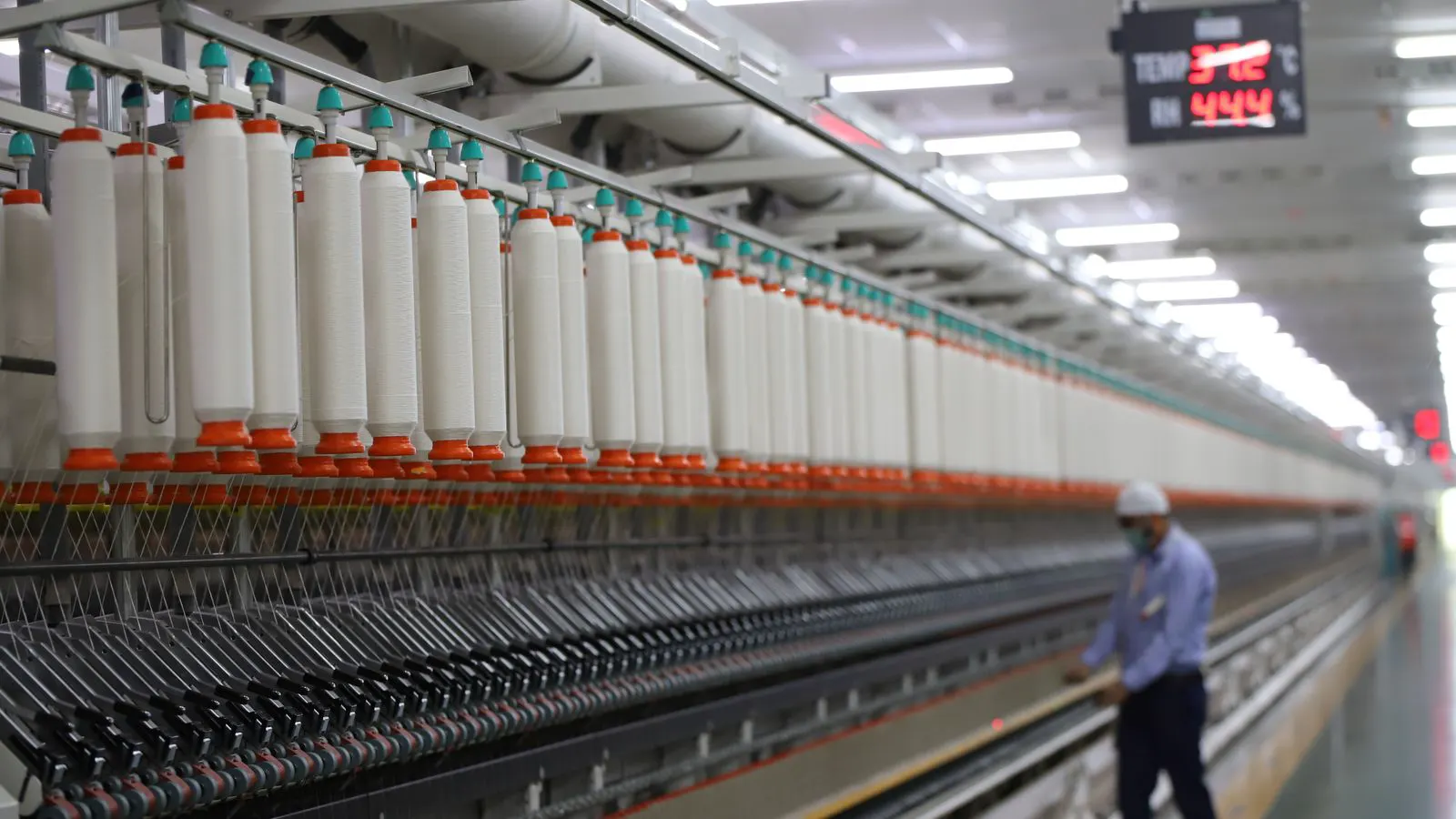
Importers should match air jet spinning equipment to their specific yarn targets, daily output goals, and maintenance capabilities. Focus on spindle count, yarn count range, and maintenance access to ensure the machine fits your production plan and quality standards.
- Match machine capacity to your target yarn count and daily production requirements
- Evaluate maintenance access and spare parts availability before purchase
- Test machine performance with your specific fiber materials before finalizing orders
What is air jet spinning and when does it make sense for your operation?
Air jet spinning uses compressed air to twist fibers into yarn instead of relying on mechanical contact. The process suspends the fiber bundle in the air while high-pressure jets create the twist. This eliminates the fly or contact zone that ring spinning requires. The absence of a physical contact point changes the yarn structure. The fibers twist without rubbing against a metal or ceramic surface, which reduces friction and heat generation during the spinning cycle.
This method produces smooth yarn with less hairiness than rotor spinning. It works well for short fiber cotton, viscose, and polyester blends. Many importers choose it for medium to fine yarn counts where quality consistency matters more than maximum speed. The technology is particularly useful when the final fabric requires a clean appearance. For example, a knitted jersey made from air jet spun cotton often shows fewer loose fibers on the surface than a comparable ring spun yarn. This visual clarity is a key factor for apparel buyers who inspect fabric for defect rates.
Do not assume air jet spinning suits every mill. It is less economical for very coarse yarn counts compared to ring spinning. The mechanics of air jet spinning rely on precise air velocity and timing. At heavy counts, the fiber bundle becomes thicker and harder to control with air alone. Ring spinning often handles these heavier yarns with more consistent tension and lower energy costs. The machine also requires careful air system management. The air jets must maintain consistent pressure and temperature. If the air system is poorly maintained or the compressor output fluctuates, the twist quality drops immediately.
If your target is heavy denim yarns at high volume, compare ring spinning options carefully before committing to air jet technology. Air jet spinning shines in the medium to fine range. For coarse counts, the energy consumption per meter of yarn often becomes higher than ring spinning. The decision hinges on your product mix. If you produce a portfolio of fine and medium yarns for knitwear and lightweight woven fabrics, air jet spinning is a strong candidate. If your output is dominated by heavy twill or canvas yarns, the economics may favor ring spinning.
How to calculate the capacity you actually need
Start with your product requirements, not the machine specification sheet. Determine your target yarn count, daily production hours, and quality standards. Then work backward to the machine size. This reverse calculation prevents overbuying. Many buyers make the mistake of selecting a machine based on the largest spindle count they can afford. This leads to idle capacity and higher fixed costs.
A typical air jet spinning frame has between 24 and 80 spindles, depending on the manufacturer and model. Each spindle produces one yarn at a time. Multiply the spindle count by the expected output per spindle to get the theoretical daily capacity. But theoretical capacity is not what you will achieve. The theoretical figure assumes perfect fiber supply, zero breakage, and immediate changeovers. In a real mill, these conditions rarely hold.
Plan for realistic output. Maintenance downtime, yarn breakage, and changeover time reduce actual production. A conservative approach assumes you will achieve less than the maximum rated speed during normal operations. Factor in your specific fiber type. Cotton often produces slightly less consistent output than synthetic fibers due to natural variation in fiber length and strength. Cotton fibers vary in length and fineness lot by lot. This variation affects the stability of the air jet spinning process. If you switch from cotton to polyester, the expected output per spindle may change. You must recalculate your capacity for each fiber type.
Create a spreadsheet with your target daily output, available production hours, and a realistic efficiency percentage. This gives you the spindle count you need. Do not buy more capacity than you can use. Excess capacity creates idle machine costs and underutilized staff. For instance, if you need 5,000 kg of yarn per day and a 64 spindle frame produces 400 kg per day at 80% efficiency, you need roughly 12.5 frames. Buying 14 frames gives you a buffer, but only if you can staff and maintain the extra two. If your demand fluctuates, consider a smaller frame with higher flexibility rather than a massive frame that cannot adjust easily.
What quality characteristics should you verify before purchase?
Yarn quality in air jet spinning depends on several mechanical and process factors. Evaluate the machine on these specific points. Do not rely on marketing descriptions. Ask for the technical data that backs them up.
Yarn strength consistency is the first metric. Ask for test reports from the manufacturer showing strength variation across multiple bobbins. Low variation means the air jets and twisting mechanism maintain uniform tension. High variation indicates mechanical wear or calibration issues. Strength variation is often measured as the standard deviation of break strength across a batch. A low standard deviation indicates that the machine holds the twist constant throughout the bobbin. If the standard deviation is high, you will see weak yarns in your weaving or knitting process. These weak points lead to breaks and production stoppages.
Hairiness matters for finished fabric appearance. Air jet spinning generally produces cleaner yarn than rotor spinning, but the degree depends on the machine design. Request samples spun with your exact fiber blend. Visual inspection and a hairiness test on the samples will tell you more than any specification sheet. Hairiness is measured by the number of loose fibers per unit length. A lower count means a cleaner yarn surface. For certain market segments, such as high-end knitwear, low hairiness is a strict requirement. If the machine cannot meet this threshold with your fiber, it is not a fit.
Twist consistency is critical. Check the twist per meter across different positions on the bobbin. The top, middle, and bottom should show minimal difference. Inconsistent twist causes weak points in the yarn that break during weaving or knitting. Twist variation can be caused by changes in air jet pressure or mechanical drift in the spindle assembly. If the twist is too low, the yarn will be weak and prone to breakage. If the twist is too high, the yarn may become stiff and lose its drape. Both extremes affect the final fabric quality.
How to evaluate the maintenance and support requirements
Maintenance access determines your long-term operating costs. Air jet spinning machines have moving parts that require regular inspection. The air jets, twist mechanisms, and spindle assemblies need periodic cleaning and adjustment. Dust and fiber debris accumulate in these areas. If they are not cleaned regularly, the air flow becomes restricted and the twist quality degrades.
Look for machines with easy access to these components. If you need to remove major panels or relocate heavy sections for routine maintenance, your labor costs increase. Consider the training burden too. If your maintenance team has never worked with this machine type, the learning curve adds time before you reach full output. A complex machine may require specialized tools or software knowledge. Ensure your team can handle the basic diagnostics and adjustments without waiting for external support.
Spare parts availability is a common pain point for importers. Confirm that the manufacturer supplies parts directly or has a reliable distributor network in your region. Check lead times for common wear items like air jet nozzles, spindle bearings, and tension components. A machine with excellent performance but slow parts delivery will hurt your production schedule. If a nozzle wears out and the replacement takes three months to arrive, you may need to shut down that section of the frame. Plan for a buffer stock of critical parts.
Ask for a detailed maintenance schedule. This should include daily checks, weekly inspections, and annual overhauls. The cost of maintenance should be part of your total ownership calculation, not an afterthought. Include the cost of air filtration, lubrication, and inspection labor. A machine that requires frequent downtime for minor adjustments will have higher operational costs than a machine that runs smoothly.
How to compare different machine configurations for your specific needs
Not all air jet spinning machines are built the same. Manufacturers offer various configurations that affect both quality and capacity. The differences often lie in the air system design, spindle arrangement, and automation features.
The table below outlines the main criteria to evaluate when comparing options:
| Criterion | What to look for | Why it matters |
|---|---|---|
| Spindle count range | 24 to 80 spindles, with clear output per spindle | Determines your daily production volume and initial investment level |
| Yarn count range | Ability to spin from fine to medium counts with your fiber type | Ensures you can produce the specific yarns for your target markets |
| Air jet system design | Number and placement of air jets per spindle | Affects twist consistency and yarn smoothness |
| Maintenance access | Ease of reaching tension components and air jets | Reduces downtime and lowers long-term maintenance costs |
| Fiber compatibility | Supported fiber types and blend ranges | Prevents issues when changing production lines or testing new materials |
| Speed range | Minimum and maximum spindle speeds with quality maintained | Determines flexibility for different production scenarios |
Pay attention to the yarn count range. A machine that only handles coarse yarns will not meet your needs if you plan to produce finer counts. Similarly, a machine optimized for fine counts may not be economical if you need heavier yarns. Match the machine to your product portfolio. For example, if you produce a mix of yarn counts, look for a machine that can adjust its settings easily. A machine that requires major reconfiguration to change yarn counts will lose production time during changeovers.
How to test and validate the machine before finalizing your order
Do not rely only on factory demonstrations. Request a trial period or a test run with your actual fiber materials. Spin a small batch using your specific cotton, viscose, or polyester blend. Test the yarn under your intended weaving or knitting conditions. Factory demonstrations often use idealized fiber lots that are easy to process. Your production fiber may have different properties. Testing with your own materials reveals the true performance of the machine.
Check the yarn on your loom or knitting machine. Air jet spun yarn behaves differently from ring spun yarn in some applications. If you produce fabrics for a specific customer, send the test yarn to them for evaluation. Customer acceptance matters more than laboratory test results. Some customers may prefer the hand feel of ring spun yarn even if air jet yarn passes laboratory tests. If your customer has specific requirements, ensure the test yarn meets them.
Document any issues during the trial. Note yarn breakage rates, twist variation, and any problems with bobbin winding. Use this data to negotiate terms or request modifications. A good manufacturer will respond to specific technical feedback rather than generic promises. If you find that the yarn breaks at the winding end, ask the manufacturer to adjust the tension settings or inspect the air jet alignment. Do not accept vague explanations. Demand a clear technical solution.
A decision checklist for importing air jet spinning machines
Before signing a contract, confirm these items:
- Your target yarn count and daily production volume match the machine’s capability
- You have spun test yarn with your exact fiber materials
- Maintenance access and spare parts lead times meet your operational needs
- The machine supports the fiber blends you plan to use
- Training for your maintenance and production staff is included
- Quality specifications for strength, hairiness, and twist are clearly documented
- Total cost includes installation, commissioning, and initial spare parts
- You have a clear plan for machine integration into your existing plant layout
Air jet spinning suits importers who need quality yarn at moderate to high speed with lower hairiness than rotor spinning. The method works well for cotton and blended fibers in the medium to fine count range. The right machine depends on your specific product requirements, not general industry trends. Match the equipment to your actual production plan, test it with your materials, and verify the support structure before you commit.
Frequently asked questions
What is the typical spindle count for air jet spinning machines?
Most machines range from 24 to 80 spindles, though specific counts vary by manufacturer and intended production volume.
How does air jet spinning compare to ring spinning for cotton yarn?
Air jet spinning generally produces smoother yarn with less hairiness, while ring spinning often handles coarser counts more economically and may produce stronger yarn at higher counts.
What fiber types work best with air jet spinning?
Short fiber cotton, viscose, and polyester blends perform well. Very long staple fibers or specialty fibers may require specific machine configurations.
How long should maintenance intervals be for air jet spinning machines?
Daily checks for air pressure and tension, weekly inspections of moving parts, and annual overhauls are typical, but exact schedules depend on the manufacturer and operating conditions.
What should I look for in yarn quality test reports from a manufacturer?
Request data on strength variation, hairiness measurements, and twist consistency across multiple bobbins. These metrics show actual performance rather than theoretical capabilities.