Comparison: Ring vs Rotor Spinning for Cost Efficiency
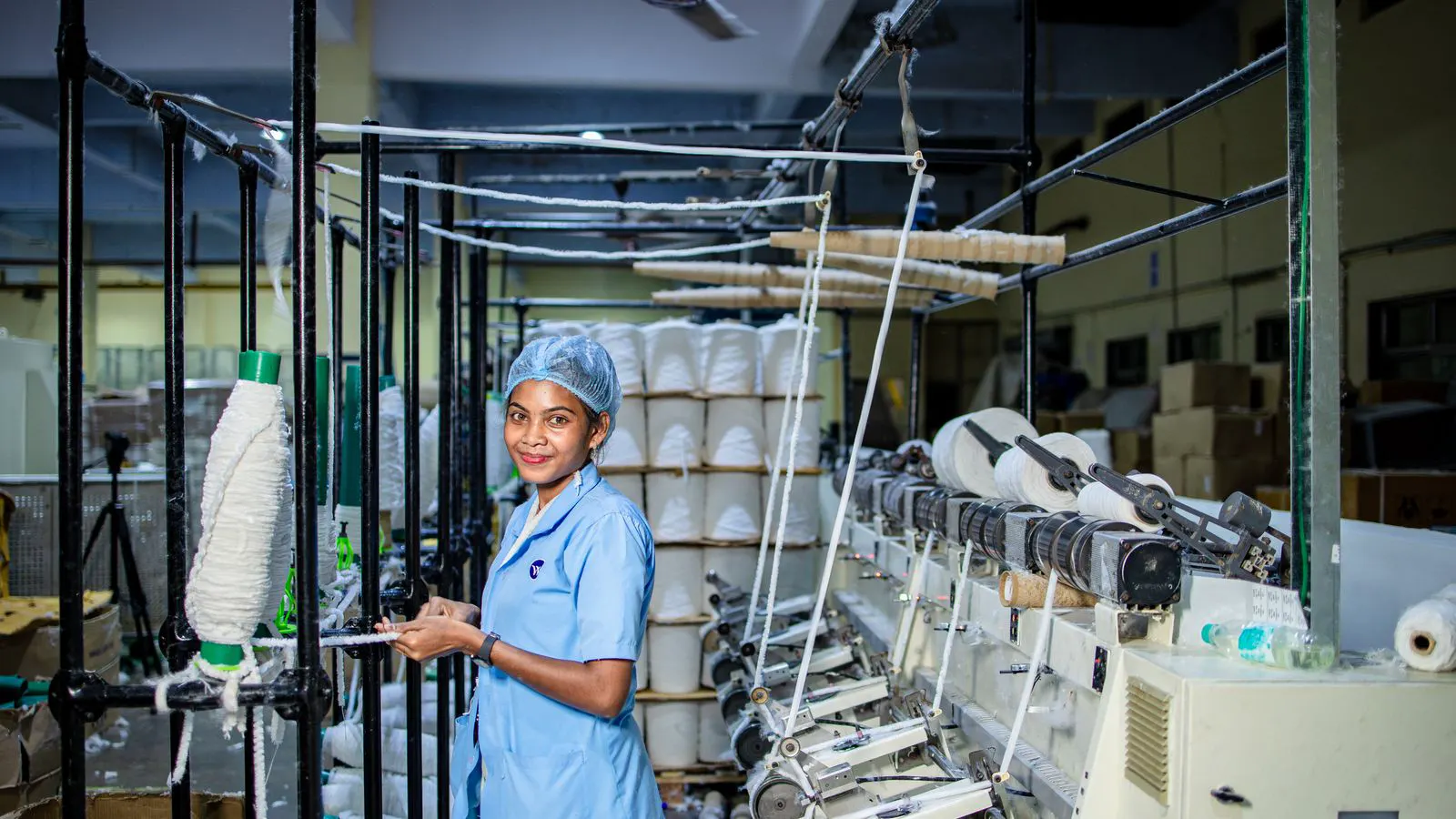
Ring spinning offers lower long-term maintenance and higher yarn quality, while rotor spinning provides faster throughput and lower initial capital costs. The right choice depends on target yarn grade, volume, and maintenance budget.
- Ring spinning has lower maintenance costs and higher yarn quality, but requires more skilled operators.
- Rotor spinning offers higher production speed and lower capital costs, but needs more frequent component replacement.
- Total cost of ownership depends on yarn grade, production volume, and maintenance strategy.
- ROI calculation must include energy, labor, yarn quality premiums, and downtime costs.
Which Spinning Method Has Lower Upfront Capital Costs
Rotor spinning machines typically require lower initial investment than ring spinning frames. The rotor system is mechanically simpler, with fewer moving parts than a ring frame. A standard ring spinning frame has many individual components per head, including bobbins, flyers, and guides. Rotor machines use a single rotating head with multiple needles. This design reduces the number of precision parts that need to be sourced and installed.
The difference in part count affects procurement and installation timelines. Ring frames require precise alignment of each head during installation. If the flyer or ring is off by even a fraction of a millimeter, the yarn will twist irregularly. Rotor heads, while also requiring calibration, generally tolerate installation variances better. This simplifies the installation process and reduces the labor cost for setup.
Capital costs also depend on the number of heads required for a given production line. Ring spinning often needs more heads to match rotor output because each head produces a single yarn strand. Rotor machines produce multiple strands per head. For a plant targeting a specific daily tonnage, the rotor line may require fewer machines and less floor space. This reduces installation costs and utility connections.
Consider a plant planning a new line for medium-count yarn. A ring frame line might need five or six heads to achieve a certain hourly output. A rotor line might reach the same output with two or three heads. Fewer heads mean fewer utility connections for air, water, and electricity. They also mean less floor space. The savings on civil works, electrical conduit, and air compressor sizing can be significant for a new build.
However, capital cost is only one line item. Buyers must evaluate the full cost of ownership over the machine life. A lower purchase price does not guarantee a lower total cost if the machine requires more frequent service or produces more waste. The initial savings from a rotor machine might be offset by higher maintenance costs and lower yarn yield over five or ten years.
How Maintenance Costs Differ Between the Two Systems
Maintenance is where the cost gap between ring and rotor spinning often shifts over time. Ring spinning machines have longer service intervals for major components. The ring, flyer, and bobbin assembly wear slowly when properly adjusted. Routine maintenance focuses on cleaning, tension checks, and minor part replacement.
A typical ring frame maintenance schedule includes daily cleaning of the flyer and ring, weekly tension checks, and monthly lubrication of the drive mechanisms. Major overhauls, such as replacing the ring or flyer, occur less frequently. If the machine is well maintained, these components can last for years. The maintenance cost per kilogram of yarn produced is relatively low and predictable.
Rotor spinning machines have shorter service cycles. The needles, comb, and rotor body experience more friction and impact per hour. Needle replacement is a regular task. Some plants replace needles weekly or biweekly depending on yarn count and production intensity. The needle cost adds up quickly. A plant running high-volume rotor machines must budget for a steady stream of small parts.
Needle replacement is not just a cost issue; it is a quality issue. Worn needles leave small holes in the yarn or create uneven twist. If a plant ignores needle wear to save money, the yarn quality drops. This leads to higher rejection rates and customer complaints. The cost of replacing worn needles is usually lower than the cost of selling downgraded yarn or losing a customer.
Labor cost also varies. Ring spinning requires operators skilled in tension adjustment and end-to-end control. A small tension error can cause breaks or uneven yarn. Rotor spinning is more automated in some aspects, but it needs operators who understand needle management and comb cleaning. Both systems require training, but the skill profile differs.
Ring spinning operators must constantly monitor the yarn formation process. They adjust tension, check for irregularities, and intervene quickly when breaks occur. Rotor spinning operators focus more on the consistency of the needle and comb. They must ensure the comb is clean and the needles are seated correctly. The training period for rotor operators is shorter, but the attention to detail required for needle management is high.
Yarn Quality and Production Economics
Yarn quality directly affects revenue. Ring spun yarn is generally smoother, stronger, and more consistent in twist. This makes it suitable for high-end fabrics such as fine shirts, dress fabrics, and technical applications. Rotor spun yarn has a slightly higher hairiness and lower twist uniformity. It works well for bulk fabrics, towels, and industrial applications where cost per meter matters more than surface finish.
The production economics change when the buyer evaluates what the yarn will sell for. A ring spun yarn command premium may be small in some markets. In others, the price gap between ring and rotor yarn can be significant. If the target customer pays more for smoother yarn, the higher production cost of ring spinning may be offset by the sale price. If the market is price-sensitive, rotor spinning may deliver a better margin despite lower yarn quality.
For example, a mill selling yarn to a shirt manufacturer might find that the customer requires a specific twist and smoothness. The mill cannot use rotor yarn for this order. The mill must use ring spinning, even though the production cost is higher. The premium price from the customer covers the additional cost. Conversely, a mill selling yarn to a towel manufacturer has more flexibility. The customer cares about cost and absorbency, not surface smoothness. The mill can use rotor yarn and maintain a healthier margin.
Waste and breakage also affect economics. Ring spinning has a lower break rate when properly maintained. Rotor spinning has a higher breakage rate, especially during changeovers and when needle wear is ignored. Breakage creates scrap and lost production time. A plant must track breakage rate per hundred meters and compare it against yarn sale price.
A plant running a rotor line might experience a break rate that is higher than a ring line. If the yarn is cheap, the financial impact of a break is small. If the yarn is expensive, the impact is larger. The plant must calculate the cost of scrap, the cost of lost production time, and the cost of labor to re-splice the yarn. These costs must be included in the production economics model.
Total Cost of Ownership and ROI Calculation
A complete ROI analysis for spinning machinery must go beyond purchase price. The calculation should include energy, labor, maintenance, yarn quality, and downtime. Energy consumption per kilogram of yarn is a key metric. Ring spinning machines often use more energy because of the multiple moving parts per head. Rotor spinning uses less energy per head but may run more heads to match output.
Energy costs vary by location and electricity rates. A plant in a region with high electricity rates must pay close attention to energy efficiency. Ring spinning machines, with their multiple moving parts, generally consume more energy per kilogram of yarn. However, rotor machines have their own energy demands. The rotor head spins at high speeds, and the comb and needles require consistent power. The plant should measure energy consumption for each machine and calculate the cost per kilogram.
Labor cost depends on the plant’s staffing model. A plant running both systems may assign different operator ratios. Ring spinning may need more frequent checks per head. Rotor spinning may need less time per head but more time for needle management. The labor cost per kilogram of yarn must be calculated for each system.
Maintenance costs should be broken into preventive and corrective categories. Preventive maintenance includes scheduled cleaning, lubrication, and part replacement. Corrective maintenance includes unplanned repairs and downtime. A plant with a well-maintained ring frame may have lower corrective costs. A plant with a poorly maintained rotor machine may face frequent needle and comb replacements.
Downtime is a critical factor. Ring frames can be stopped for maintenance without immediately affecting yarn quality, as the components wear slowly. Rotor machines may experience downtime due to needle breakage or comb clogging. The plant must estimate the cost of downtime, including lost production and labor costs during the repair period.
The ROI calculation must also account for the machine’s useful life. Ring spinning machines often have a longer useful life due to the durability of their components. Rotor machines may need more frequent upgrades or replacements of the needle and comb. The plant should calculate the net present value of the cash flows over the machine’s life. This includes initial investment, operating costs, and revenue. The option with the higher net present value is the better financial choice.
When to Choose Ring Spinning
Ring spinning is the better fit when yarn quality is the primary differentiator. If the buyer sells to customers who require smooth, uniform yarn, ring spinning delivers a product that is harder to replicate with rotor technology. The higher production cost is justified by the premium price.
Ring spinning also suits plants that want longer component life. The ring, flyer, and bobbin assembly can last for years with proper care. A plant that runs continuous shifts and values predictable maintenance schedules may prefer the ring system. The lower break rate also reduces waste and improves consistent output.
The downside is higher capital cost and more skilled labor. If the plant lacks experienced spinning operators, the quality gap may widen. Training and supervision become part of the cost. A plant with limited labor resources might find that ring spinning is difficult to manage. The operators must be trained to handle the delicate tension adjustments and quality control.
Another consideration is market positioning. If the plant wants to target high-end customers, ring spinning provides the necessary quality. The brand image of the mill may be enhanced by producing high-quality yarn. This can lead to long-term customer relationships and stable demand.
When to Choose Rotor Spinning
Rotor spinning fits plants that prioritize throughput and lower initial investment. The higher production speed and multiple strands per head allow the plant to reach target tonnage faster. This is useful for new plants or for adding capacity without major capital outlay.
Rotor spinning also works well for bulk yarn applications. If the yarn is used in towels, blankets, or industrial fabrics, the slight difference in hairiness does not affect the final product. The lower production cost per kilogram gives the plant more margin.
The trade-off is higher maintenance frequency and more waste. A plant must accept regular needle replacement and monitor comb condition. If maintenance is skipped, yarn quality drops and breaks increase. The ROI calculation must reflect this ongoing cost.
Another advantage of rotor spinning is flexibility. Rotor machines can be adjusted for different yarn counts and types with less effort than ring frames. This allows the plant to switch between product lines more quickly. If the market demand changes, the plant can adapt its production mix more easily.
Which Option Delivers Better Long Term Return
The long term return depends on how the plant manages each variable. A ring spinning line with excellent maintenance and skilled operators can deliver strong ROI through quality premiums and low waste. A rotor spinning line with disciplined maintenance and a price-sensitive market can deliver strong return through volume and lower production cost.
The decision is not about which machine is “better.” It is about which machine matches the plant’s target market, volume, and maintenance capability. A plant should model both options before committing. The model should include capital cost, energy, labor, maintenance, yarn sale price, and downtime. The option with the higher net present value over the machine life is the correct choice.
A plant must also consider its strategic goals. If the plant wants to build a reputation for quality, ring spinning may be the right choice. If the plant wants to maximize volume and minimize costs, rotor spinning may be better. The plant must align its machine choice with its business strategy.
Finally, the plant should review its decision regularly. Market conditions, raw material prices, and customer requirements change. A plant that chose ring spinning for quality may find that rotor spinning becomes more attractive if the market shifts to price-sensitive applications. The plant must remain flexible and willing to adjust its production strategy.
Frequently asked questions
Does rotor spinning always cost more per kilogram than ring spinning?
Not always. Rotor spinning has lower capital and energy costs per head, but higher maintenance and waste costs. The per kilogram cost depends on production volume, yarn grade, and maintenance discipline.
How long do rotor needles typically last?
Needle life varies with yarn count and production intensity. Many plants replace needles weekly or biweekly. The exact interval depends on the yarn type and the quality of the comb.
Can a plant run both ring and rotor spinning lines?
Yes. Some plants run ring spinning for premium yarns and rotor spinning for bulk yarns. This allows the plant to serve different markets with the same facility.
What is the main risk of choosing rotor spinning?
The main risk is maintenance neglect. If needles and combs are not replaced on schedule, yarn quality drops and breakage increases. The plant must build a maintenance routine into its cost model.
How should a buyer calculate ROI for spinning machines?
A buyer should model capital cost, energy, labor, maintenance, yarn sale price, and downtime over the machine life. The option with the higher net present value is the better choice.