Outlook: Collaborative Robots in Garment Finishing Lines
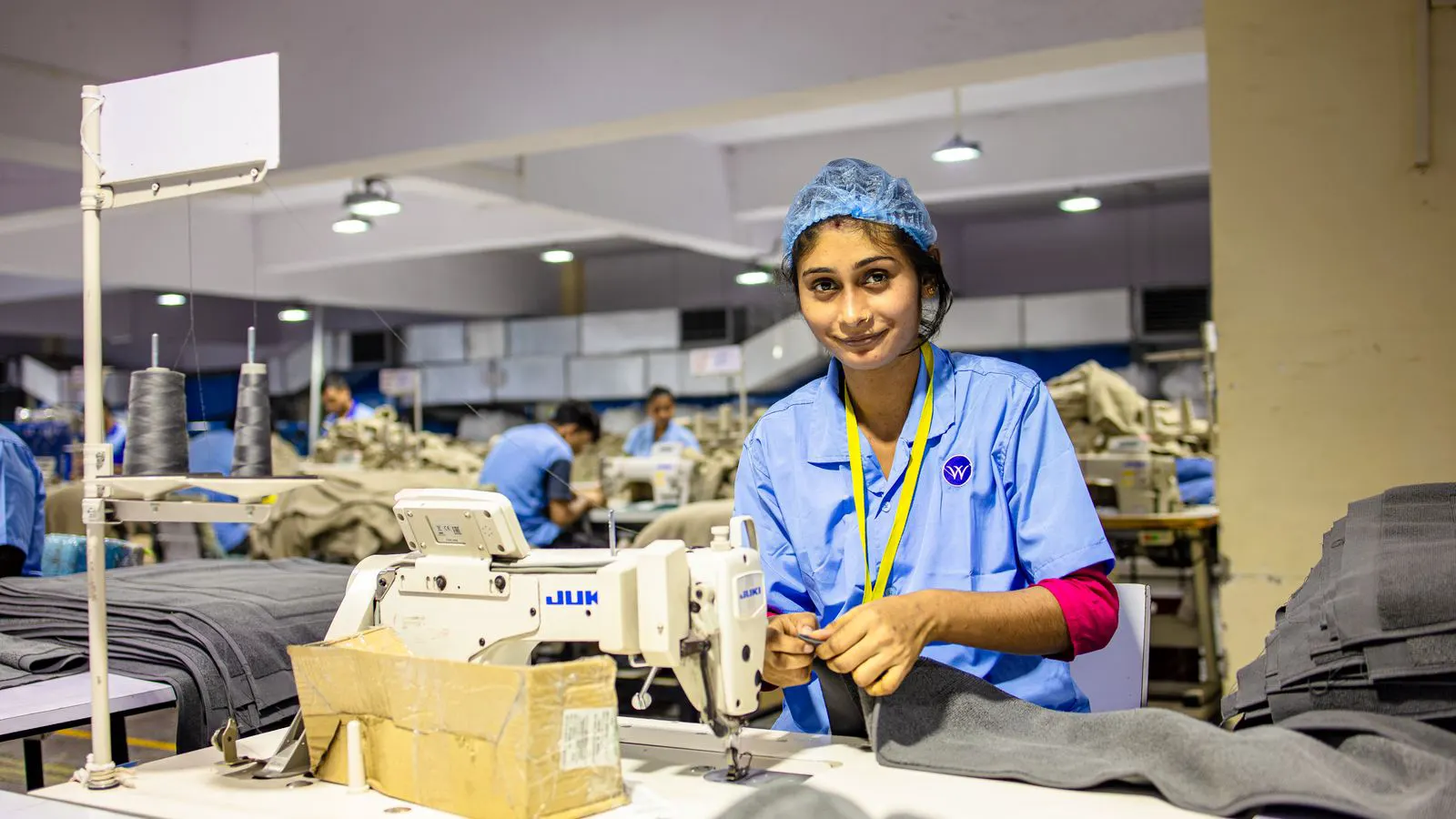
Collaborative robots in garment finishing handle repetitive, heavy, or hazardous manual tasks with greater consistency than human operators. They integrate with existing lines to reduce errors and fatigue. Plants should prepare by mapping workflows, updating safety zones, and validating software before deployment.
- Cobot deployment in garment finishing requires careful workflow mapping before hardware selection.
- Safety integrations must account for shared workspaces between humans and machines.
- Start with a single high-friction task to prove value before scaling.
- Operator training is a critical component of successful cobot integration.
- Maintenance planning should include joint and gripper inspection routines.
Garment finishing lines have historically relied on manual handling for folding, bundling, and quality checks. These tasks are repetitive, physically demanding, and prone to human error. As plants seek a smarter textile factory environment, collaborative robots are moving from experimental pilots into standard operating procedures.
Why Manual Finishing Tasks Are Changing
The primary driver is consistency. Human operators can vary in fatigue levels, attention span, and physical capability throughout a shift. A cobot performing the same fold, stack, or inspection task repeatedly will maintain the same parameters every cycle.
Consider a folding station. A human operator might vary the edge alignment by a few millimeters over an eight-hour shift. A cobot with vision correction can hold that alignment tightly. The difference matters when downstream processes require uniform bundle dimensions for packaging or container loading.
Safety is the second major factor. Finishing lines often involve heavy rolls of fabric, sharp cutting blades for trim, and chemical finishing baths. These are high-risk zones for manual labor. Cobot safety features, such as force-limiting joints and speed monitoring, allow machines to work in close proximity to humans without full enclosure.
The Five Shifts Buyers Should Plan For
Plants adopting collaborative robots in garment finishing should expect five distinct operational shifts. These are not linear steps, but overlapping changes that require planning and budget.
-
Workflow Mapping and Task Selection
Before purchasing hardware, map the entire finishing line. Identify tasks with high repetition, high error cost, or high physical strain. A common starting point is bundling or folding. Do not attempt to automate the whole line at once. Pick one bottleneck that, if improved, reduces downstream delays. -
Safety and Workspace Redesign
Cobots operate in shared workspaces. You must define human zones and machine zones. Install light curtains, safety mats, or safety scanners. Review your existing lockout/tagout procedures. The integration of a cobot changes how workers interact with the machine during maintenance and jam clearing. -
Software and PLC Integration
The cobot is not a standalone machine. It must communicate with the line PLC, conveyor drives, and vision systems. Check your PLC vendor’s support for robot communication protocols. If you are using a legacy PLC, you may need an interface gateway. This integration phase often takes longer than the physical installation. -
Training and Operator Role Change
Operators will not be eliminated, but their roles will change. They must become robot supervisors. Training should cover basic programming, fault codes, and safety interlocks. If operators feel the robot is a threat, adoption will suffer. Frame the change as a tool that removes the worst parts of the job. -
Maintenance and Consumables Planning
Cobots have moving parts that wear. Joints, cables, and grippers require regular inspection. Establish a preventive maintenance schedule. Keep spare parts in stock. A robot downtime event during a peak season is costly and disruptive.
How to Validate a Cobot for Your Specific Finishing Line
Not all collaborative robots are suitable for textile work. Fabric is soft, irregular, and sometimes heavy. A gripper designed for rigid boxes will fail on a bundle of cotton.
| Cobot Feature | Why It Matters for Garment Finishing |
|---|---|
| Payload Capacity | Must handle the heaviest bundle or roll in your specific process. |
| Gripper Type | Soft grippers or vacuum suction are needed for fabric. |
| Reach and Workspace | Must fit within your existing line footprint. |
| Communication Ports | Must support your existing PLC and MES systems. |
| Safety Ratings | Must meet local standards for shared human-machine spaces. |
Pay close attention to the gripper specification. A vacuum gripper works well for flat, non-porous fabrics. A soft pneumatic gripper is better for delicate materials or irregular shapes. If you are moving from manual to automated, bring your sample fabrics to the integration partner. Test the gripper on your actual material, not just the demo material.
Common Mistakes in Cobot Deployment
Most failed cobot projects share a few common traits. The first is buying the robot before defining the task. This leads to hardware that is either underpowered or over-specified.
The second mistake is underestimating the software work. The physical installation might take a week. The integration and programming can take months. Budget time for this phase.
The third mistake is ignoring change management. If you do not involve the floor operators early, you will face resistance. Ask them what they hate about the task. Then show them how the robot will fix that specific pain point.
What to Expect During the First 90 Days
The first 90 days are a learning period. Expect the robot to run slower than your target cycle time. This is normal. The programming will be adjusted, and the safety parameters will be fine-tuned.
Do not rush the ramp-up. Start with a low production speed. Monitor the robot’s behavior. Check for any issues with fabric slipping or misfolding. Collect data on cycle times and error rates. This baseline data is critical for proving return on investment.
Preparing Your Plant for a Smarter Textile Factory
The transition to a smart textile factory is not just about adding robots. It is about changing how you think about data and maintenance. Cobots generate data on every cycle. Use this data to identify trends. If the robot reports a slight increase in gripper force, it might indicate a change in fabric weight or a worn gripper seal.
Work with your maintenance team to create a new routine. Include robot checks in your daily startup checklist. Inspect the gripper for wear. Check the joint cables for stress. Keep a log of any faults and their resolutions.
The goal is a system where the robot handles the repetitive work, and the human handles the exceptions. This is the core of a modern smart textile factory.
Final Thoughts on Cobot Adoption
Collaborative robots are not a magic fix. They are a tool that requires planning, integration, and ongoing management. The plants that succeed are those that treat the robot as a new team member, not just a machine.
Start small. Pick one task. Prove the value. Then expand. The future of garment finishing is not fully automated, but it is increasingly assisted. The plants that embrace this change early will have a competitive edge in quality and speed.
Frequently asked questions
Do collaborative robots replace human workers in garment finishing?
No, they typically change the role of the worker. The robot handles repetitive tasks, while the human operator handles supervision, programming, and exception handling.
How long does it take to integrate a cobot into an existing finishing line?
Integration time varies. Physical installation may take days, but software integration and programming can take several months depending on the complexity of your existing systems.
What are the biggest risks when adding a cobot to a textile line?
The main risks are safety integration issues, software incompatibility, and a lack of operator training. These can lead to downtime and failed adoption.
Can a cobot handle different types of fabrics?
Yes, but the gripper must be appropriate for the material. A single gripper may not work well for both heavy denim and light chiffon. You may need to change grippers for different fabric types.
Is it worth investing in a cobot if my plant is small?
It can be, if you have a specific high-friction task. Look at the cost of manual errors and labor costs. If the robot can reduce those costs, the investment may pay off.