Buying Guide: Industrial Robotic Palletizing Systems
This guide outlines the technical and operational criteria for selecting industrial robotic palletizing systems. It covers payload capacity, cycle time, end effector choice, and integration requirements to automate fabric and garment storage effectively.
- Match the robot payload and reach to the heaviest and largest fabric or garment load in your facility.
- Verify end effector compatibility with fragile or shaped goods like folded garments and rolled fabric.
- Assess the integration complexity and data requirements before committing to a specific warehouse automation setup.
- Prioritize safety certifications and maintenance access when evaluating long-term operational reliability.
- Test the system with actual production materials during the commissioning phase to validate performance.
Industrial robotic palletizing systems replace manual forklifts and pallet jacks with automated material handling. Textile mills, garment factories, and distribution centers use these robots to stack fabric rolls, folded garments, and finished goods. The selection process requires more than a comparison of arm length or price. It demands a clear understanding of the specific loads, facility constraints, and downstream systems involved in your textile logistics.
What defines the right payload and reach?
The robot must handle the heaviest and largest load in your operation without excessive stress. A fabric roll can vary significantly in weight depending on the material, width, and length. A heavy denim roll weighs far more than a lightweight polyester fabric roll. Garment pallets can also become top-heavy if folded boxes are stacked unevenly.
Determine the maximum weight of a single unit and the total weight of the completed pallet. The robot payload rating must exceed this maximum with a safety margin. Manufacturers often specify a payload at the center of gravity, but the actual load may shift. Check the robot’s torque curves. A robot that can lift 300 kilograms at full reach may struggle with a heavy load at the same distance if the center of gravity is offset.
Reach is the second critical dimension. Measure the distance from the robot base to the furthest point of the loading area. This includes the pallet position, the conveyor or staging area, and any required clearance for the end effector to extract the item. A robot that is too short forces the staging area closer to the robot. This limits floor space and complicates the layout of your warehouse automation. A robot with excessive reach is heavier, more expensive, and has a slower cycle time.
Which end effector fits textile goods?
The end effector is the tool that grips the load. It determines how the robot interacts with the product. For fabric rolls, a fork or a suction cup may be used. For folded garments, a vacuum cup or a grasping hand is common. The choice depends on the fragility and shape of the goods.
Suction cups work well with smooth, flat surfaces. A stack of folded garments in a box may not be suitable for suction if the material is too soft or if the surface is textured. A gripper is more versatile but requires the load to have a defined edge or handle. Fabric rolls often require a fork that slides under the roll or a suction cup on the flat face of the roll.
Consider the transition from the staging area to the pallet. If the robot must rotate the load 90 degrees or 180 degrees, the end effector must allow this movement without damaging the goods. A vacuum cup may lose suction during a rotation if the pressure drops. A mechanical gripper is more secure but may leave marks on sensitive fabrics. Test the end effector with your actual material samples before finalizing the design.
How does cycle time affect throughput?
Cycle time is the time it takes for the robot to pick one item, move it, and place it on the pallet. It includes acceleration, deceleration, and the time spent on the end effector. A fast cycle time is necessary to keep up with the production line. If the robot cannot keep pace, items accumulate on the staging conveyor. This creates a bottleneck in your textile logistics flow.
Calculate the required cycle time based on your production rate. If your line produces 100 units per minute, the robot must handle at least 100 units per minute. Add a buffer for maintenance and minor faults. A robot with a nominal cycle time of 5 seconds per unit can handle 12 units per minute. If your line runs at 15 units per minute, the robot will fall behind.
Cycle time is also affected by the distance traveled. A robot that moves a short distance has a faster cycle time than one that moves across a large warehouse floor. Position the robot as close as possible to the staging area and the pallet position. This minimizes travel time and improves overall throughput.
What safety and compliance standards apply?
Safety is a non-negotiable aspect of warehouse automation. Robots operate in shared spaces with human workers. They must be designed to prevent injury during normal operation and maintenance. Look for robots that comply with relevant safety standards for industrial automation.
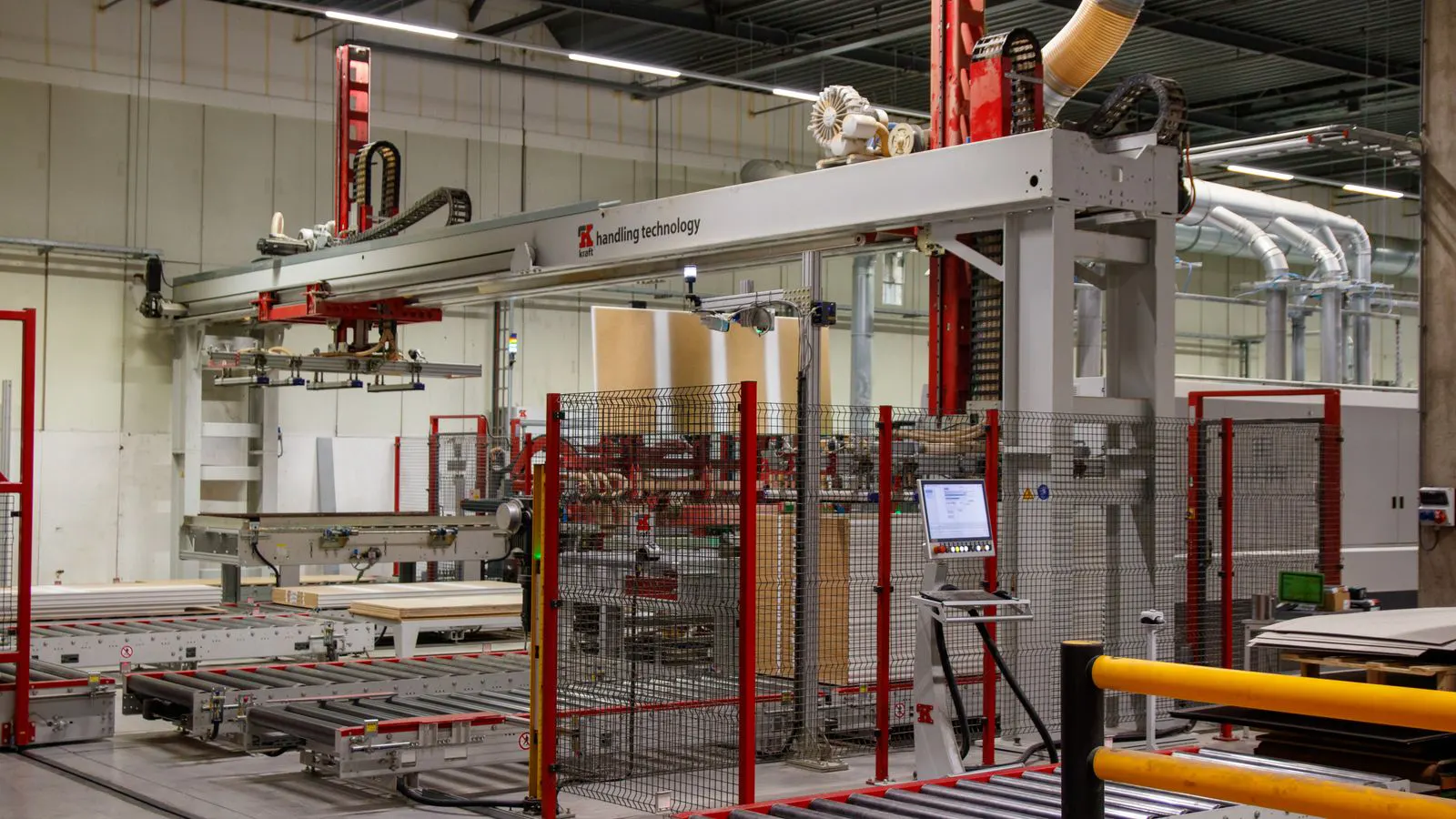
Physical barriers are a common safety measure. A fenced enclosure around the robot prevents workers from entering the operating area. Light curtains and safety scanners can stop the robot if a person enters a defined zone. These systems add complexity but reduce the need for large, permanent barriers.
Check the robot’s safety features. A robot that stops immediately when a sensor is triggered is safer than one that slows down. Also verify that the emergency stop buttons are accessible and clearly marked. During maintenance, the robot must be locked out and tagged out to prevent accidental start-up. Ensure the supplier provides documentation on safety interlocks and lockout procedures.
How do you integrate the robot with existing systems?
A robotic palletizing system does not operate in isolation. It must communicate with the conveyors, scanners, and warehouse management software. The robot needs to know when a pallet is present, when the next load is available, and when the pallet is full.
Data integration is a major part of the selection process. The robot controller should support standard communication protocols. It may need to exchange data with a local PLC or a central server. If your plant uses an existing warehouse management system, the robot must be able to send status updates and receive commands.
Consider the human interface. Operators need to monitor the robot’s status. A simple panel on the robot or a tablet in the warehouse office can display real-time data. Look for a system that provides clear error messages. If the robot stalls, the operator should know why. Poor error messaging leads to longer downtime and confusion.
How do you evaluate the supplier and service support?
The supplier’s ability to support the system after installation is as important as the hardware. A robotic palletizing system requires periodic maintenance. The supplier should provide spare parts, training, and technical support.
Check the supplier’s track record in the textile industry. They should understand the specific challenges of handling fabric and garments. Ask for references from similar facilities. Inquire about their response time for service calls. A slow response time can halt your production line.
Training is a critical component of the deal. Operators and maintenance staff need to understand the robot’s operation and limits. The supplier should provide hands-on training and documentation. A well-trained team reduces the risk of operator error and extends the life of the equipment.
Criteria Table for Equipment Selection
| Criterion | What to look for | Why it matters |
|---|---|---|
| Payload Capacity | Rated weight exceeds max load plus safety margin | Prevents mechanical failure and ensures reliable lifting. |
| Reach and Envelope | Enough distance for staging, rotation, and pallet placement | Allows flexible layout and efficient material flow. |
| End Effector | Compatible with fabric rolls, boxes, and folded goods | Ensures secure handling without damaging textile products. |
| Cycle Time | Matches or exceeds production line speed | Prevents bottlenecks in warehouse automation. |
| Safety Features | Barriers, sensors, and emergency stops | Protects workers and reduces liability. |
| Integration | Supports PLC, WMS, and local data systems | Enables smooth communication with existing plant systems. |
Decision Checklist
- Define the maximum weight and dimensions of the heaviest load.
- Measure the distances between the staging area, robot base, and pallet position.
- Select the appropriate end effector for the specific textile goods.
- Calculate the required cycle time based on production volume.
- Verify the robot’s compliance with safety standards.
- Confirm the communication protocols required for system integration.
- Request supplier references and service level agreements.
- Plan the training for operators and maintenance staff.
- Test the system with actual production materials during commissioning.
- Document the maintenance schedule and spare parts requirements.
Robotic palletizing systems offer a reliable path to automated textile logistics. The key to a successful selection lies in detailed analysis of your specific operational needs. Do not rely on generic specifications. Tailor the system to your facility, your products, and your workflow. A well-chosen robot will run efficiently for years. A poorly chosen one will create problems that are difficult to solve. Use the criteria in this guide to guide your evaluation process.
Frequently asked questions
Can a single robotic palletizing system handle both fabric rolls and folded garments?
Yes, but it requires a changeable end effector or a dual-arm setup. A single robot can be configured with different grippers or suction cups, but the changeover time must be considered.
How much floor space is needed for a robotic palletizing system?
The footprint depends on the robot reach and the staging area. Typically, you need space for the robot, a staging conveyor or table, and the pallet position. Add clearance for maintenance and safety barriers.
What is the typical maintenance schedule for a robotic palletizing system?
Maintenance usually includes daily visual checks, weekly lubrication, and periodic calibration. The supplier should provide a maintenance manual with specific intervals. Follow the manufacturer's recommendations to ensure reliability.
How do I test the robot with my actual textile materials?
Request a trial run during the commissioning phase. Bring samples of your heaviest and largest loads to the site. The supplier should demonstrate the robot handling these specific items.
What happens if the robot encounters a jam or a fault?
The robot should stop the current cycle and alert the operator via the human interface. The error message should guide the operator to the issue. Clear error reporting minimizes downtime.