Buying Guide: Air-Jet Spinning Machine Components and Quality
This guide explains how to evaluate air-jet spinning machine components before purchase. It covers critical parts, quality benchmarks, and selection criteria to help buyers make informed decisions.
- Focus on rotor, guide, and drive system quality when evaluating air-jet spinning machine components.
- Verify material specifications, tolerances, and warranty terms before signing a purchase order.
- Match machine specifications to target yarn types and production volumes to protect your investment.
- Ask for proof of testing and maintenance records for used or refurbished spinner units.
- Use the criteria table and checklist below to structure vendor discussions and technical evaluations.
What defines a reliable air-jet spinning machine?
Air-jet spinning converts staple fibers into continuous yarn using a high-speed rotor, guide assembly, and controlled air streams. The machine works by drawing fibers into a twisted stream, applying twist at the rotor, and guiding the yarn through a take-up system. The quality of the final yarn depends on the precision of these moving parts and the consistency of the air pressure.
Buyers often focus on the frame and control panel first. That is a mistake. The frame is the structure. The components are the engine. If the rotor wears out or the guide misaligns, the yarn quality drops regardless of how good the control software is.
This guide walks through the key components of an air-jet spinning machine and the quality benchmarks you need to check. It is written for engineers and buyers who need to compare vendors and make a defensible purchase decision.
Which components matter most?
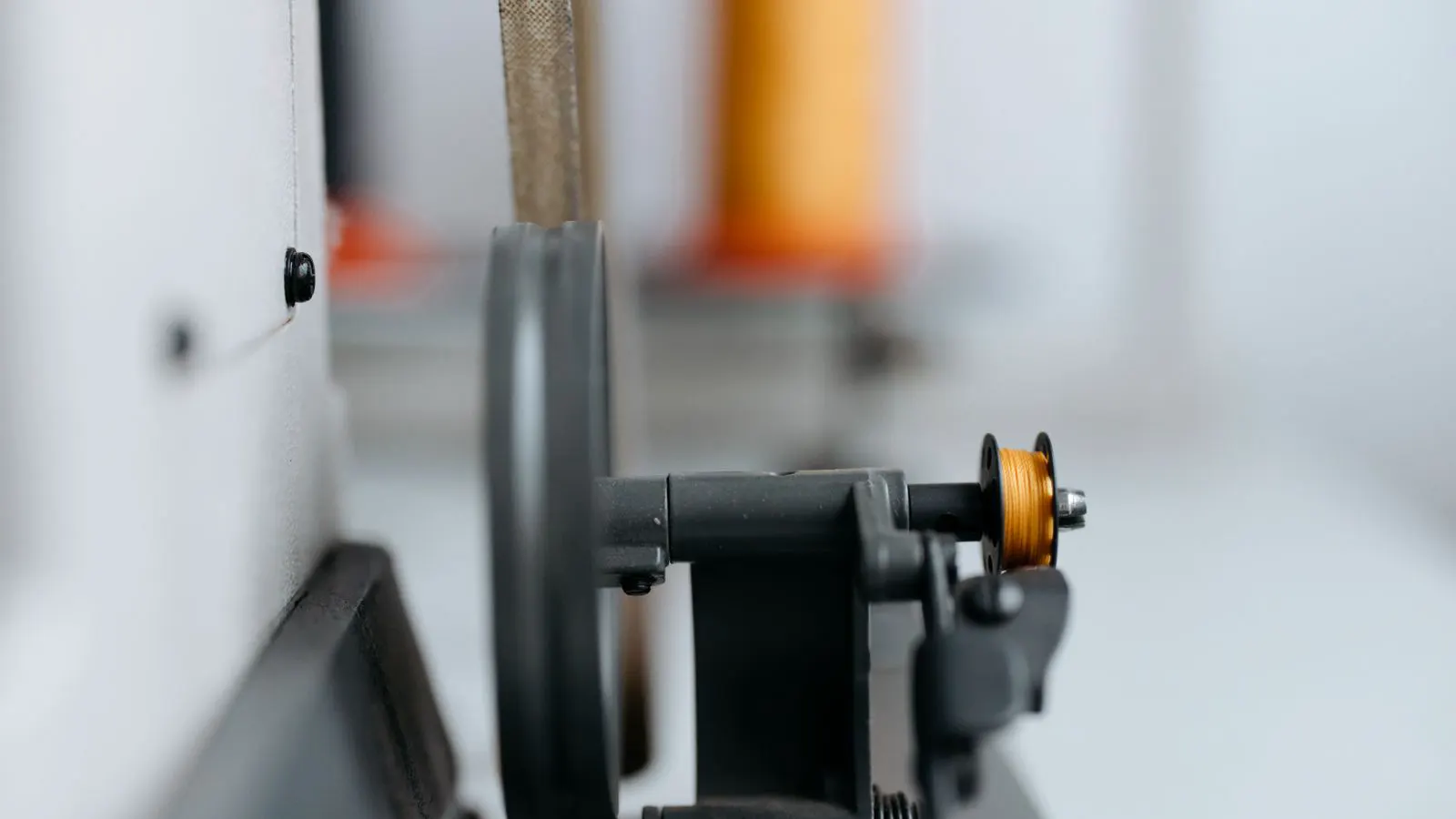
The rotor assembly is the heart of the machine. It spins the fiber at high speed to create the initial twist. The guide assembly shapes the fiber stream and controls the twist application. The drive system, usually a motor and gearbox, provides the torque and speed. The air pressure system supplies the airflow that forms the yarn. The take-up system winds the yarn onto bobbins or packages.
Each of these parts has a failure mode that affects production. A worn rotor creates uneven twist. A misaligned guide causes slubs or thin spots. A weak drive system leads to speed fluctuations. An unstable air pressure system creates inconsistent yarn diameter.
When evaluating air-jet spinning machine components, treat each of these areas separately. Do not accept a bundle quote without breaking down the parts. Vendors may offer a lower frame price to offset weaker components.
How do you assess rotor and guide quality?
The rotor is typically made from hardened steel or a high-grade alloy. It must maintain its shape under high rotational stress. Look for a smooth surface finish and precise balancing. A rotor that is not balanced will cause vibration, which transfers to the yarn and creates defects.
The guide assembly controls the fiber path. It usually consists of a guide eye, a twist zone, and a tensioning device. The materials must resist wear from continuous fiber contact. Ceramic or hardened steel are common choices. Check the tolerances on the guide eye diameter. Even small deviations can change the yarn twist and diameter.
Ask the vendor for the material certificates for the rotor and guide. Ask about the surface treatment. Ask how often these parts require replacement. If the vendor cannot answer these questions, treat it as a red flag.
The guide assembly also needs to be adjustable. You will need to change the guide settings for different yarn types. A fixed guide limits your flexibility.
What should you check in the drive and air systems?
The drive system determines the maximum speed and the stability of the spin. Look at the motor power, the gearbox ratio, and the coupling. A high-quality gearbox reduces noise and extends service life. A cheap coupling will wear out quickly and cause misalignment.
The air pressure system is often overlooked. It must provide consistent airflow at the correct pressure. Check the pressure regulator, the air filter, and the ducting. A dirty air filter reduces airflow and affects yarn formation. A poorly sized duct causes pressure drops.
Ask for the air consumption rate in liters per minute. Compare it across vendors. A lower consumption rate can mean better efficiency and lower operating cost.
The take-up system must handle the yarn without adding excessive tension. Check the winder or bobbin winder for smooth operation. Look for the maximum package capacity and the tension control method.
How do you compare vendor specifications?
Vendors publish datasheets. These datasheets often list the maximum speed, the number of components, and the power rating. They rarely list the material grades, the tolerances, or the warranty terms for the internal components.
Do not rely on the datasheet alone. Ask for a detailed parts list. Ask for the material specifications for the rotor, guide, and drive components. Ask for the warranty period and what is covered. Ask for the expected maintenance intervals.
Use the criteria table below to structure your comparison. It covers the key areas you need to evaluate.
| Criterion | What to look for | Why it matters |
|---|---|---|
| Rotor material and finish | Hardened alloy, balanced, smooth surface | Prevents vibration and maintains twist quality |
| Guide assembly | Adjustable, wear-resistant material, precise tolerances | Controls fiber path and reduces defects |
| Drive system | Motor power, gearbox quality, coupling type | Determines speed stability and service life |
| Air pressure system | Regulator, filter, ducting, consumption rate | Ensures consistent yarn formation |
| Take-up system | Winder type, tension control, capacity | Affects package quality and production speed |
| Warranty and support | Part coverage, response time, spare parts availability | Reduces risk and downtime |
This table is a starting point. You may need to add more rows based on your specific production needs. For example, if you produce very fine yarns, you may need to add a row for guide eye tolerance.
How do you match the machine to your production?
The machine must fit your yarn types and volumes. Air-jet spinning is used for polyester, nylon, and other synthetic staple fibers. It produces yarns that are lighter than ring-spun yarns. The machine speed and rotor count must match your target output.
If you plan to produce a mix of yarn types, you need a machine with easy changeover. Look for quick-release rotor assemblies and adjustable guides. If you only produce one yarn type, you can focus more on speed and efficiency.
Consider the raw material. The fiber diameter, the staple length, and the fineness affect the machine settings. Ask the vendor for the recommended fiber specifications. If your fiber does not match, the yarn quality will suffer.
Also consider the downstream process. The yarn you produce must feed into the next stage, such as weaving or knitting. If the yarn has too much twist, it may not knit well. If it has too little, it may break during weaving. Match the yarn twist to your downstream process.
What questions should you ask before purchase?
Before you sign a contract, ask the vendor these questions:
- What is the material grade of the rotor and guide assembly?
- What is the expected service life of the rotor and guide?
- What is the warranty period and what does it cover?
- What is the air consumption rate and the pressure range?
- What is the maximum speed and the minimum speed?
- What is the changeover time between yarn types?
- What spare parts are recommended to keep in stock?
- What training will you provide for our operators?
- What is the expected downtime for maintenance?
- Can you provide references from existing customers?
Write down the answers. Compare them across vendors. Do not rely on verbal assurances. Get the specifications in writing.
Decision checklist
Use this checklist to finalize your decision.
- I have reviewed the detailed parts list for all major components.
- I have confirmed the material specifications for the rotor and guide.
- I have checked the drive system and air pressure system specifications.
- I have compared the warranty terms and spare parts availability.
- I have matched the machine speed and capacity to my production volume.
- I have asked about changeover time and flexibility for different yarn types.
- I have received written answers to all technical questions.
- I have reviewed the maintenance schedule and expected downtime.
- I have confirmed the training and support plan.
- I have calculated the total cost of ownership, including spare parts and maintenance.
If you can check all of these boxes, you are ready to proceed. If you cannot, keep asking questions. Do not rush the decision. A poor purchase decision can cost you years of production losses.
Final thoughts
Air-jet spinning machine components are the difference between a machine that produces good yarn and a machine that causes headaches. The frame is just the container. The components are what do the work.
Focus on the rotor, the guide, the drive, the air, and the take-up. Check the materials, the tolerances, and the warranty. Match the machine to your yarn types and your production volume. Ask the hard questions. Get the answers in writing.
This is a long-term investment. The quality of the components will determine your operating cost and your yarn quality for years. Take the time to evaluate them properly.
Frequently asked questions
What is the most common failure point in an air-jet spinning machine?
The rotor and guide assembly are the most common failure points due to continuous wear and high stress. They require regular inspection and replacement to maintain yarn quality.
How often should I replace the rotor and guide?
The replacement interval depends on the fiber type, the speed, and the material. Ask the vendor for the expected service life based on your specific production.
Can I use any type of staple fiber in an air-jet spinning machine?
No. The machine requires specific fiber diameters and staple lengths. Check the vendor's recommended fiber specifications before purchasing.
What is the difference between a new and a used air-jet spinner?
A used spinner may have worn components and unknown maintenance history. Inspect the rotor, guide, and drive system carefully before buying a used unit.
How do I verify the air pressure system quality?
Check the pressure regulator, the air filter, and the ducting. Ask for the air consumption rate and the pressure range. Test the system during a demo if possible.