Buying Guide: Selecting Robotic Arms for Fabric Handling
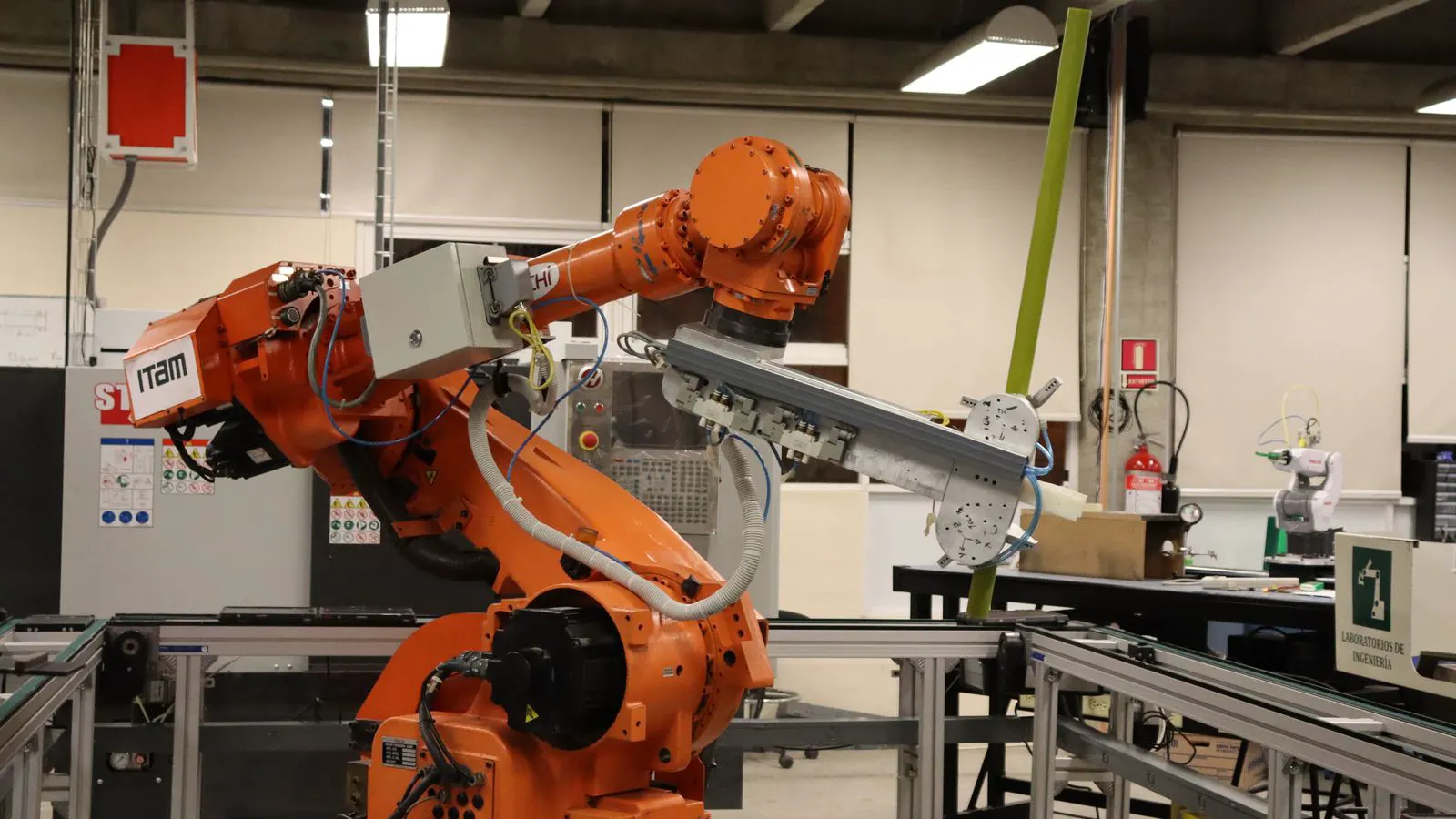
Procurement managers must evaluate payload capacity, reach, end effector design, speed, and integration capabilities. The right robotic arm must handle soft, irregular fabrics without damaging them, while fitting within existing space and production targets.
- Match arm payload and reach to the heaviest fabric bundle or roll you must move, adding margin for end effector weight.
- Prioritize soft, compliant end effectors that grip without creasing or stretching delicate textile materials.
- Verify communication protocols and PLC compatibility before purchase to avoid costly integration delays.
- Test the arm with your actual product mix, not just sample swatches, during the evaluation phase.
Define the Material and Motion Profile
Soft textiles behave unlike rigid parts. Fabric folds, shifts, and drapes unpredictably. A robotic arm that lifts a steel pallet may crush a bolt of silk or tear a knit jersey if the motion profile is wrong. Before selecting hardware, document the exact materials you handle. Note the width, length, roll diameter, and weight of the heaviest item. Include the weight of the gripper or end effector when calculating total payload. A 40 kg roll of denim is a different engineering problem than a 5 kg bundle of lightweight chiffon. The stiffness of the material dictates the required contact force. Too much force causes permanent stretching or fiber breakage. Too little force allows the fabric to slip during transport.
Identify the motion type. Is the arm moving flat fabric bundles, picking individual garments from a pile, or unloading rolls from a truck? Each scenario demands different kinematics. Palletizing requires high repeatability and force control. In-line picking demands speed and gentle contact. If your operation mixes these tasks, a single arm may struggle. Consider whether a dual-arm setup or a dedicated single-purpose unit fits the line better. Palletizing often involves heavy, stable loads that require precise placement on a moving truck floor. In-line picking involves light, unstable loads that require rapid reorientation. Mixing these tasks on one arm often leads to compromises in speed and payload. A dual-arm system allows one arm to handle the heavy lifting while the other performs the delicate picking. This separation of duties reduces the stress on the mechanical joints and allows for more specialized tooling on each unit.
Evaluate Load and Reach Constraints
Payload capacity is the first hard limit. The arm must support the combined weight of the fabric, the end effector, and any tooling. Do not select based on the rated payload alone. Check the manufacturer’s load charts for different joint positions. An arm rated for a certain weight at full reach may only support a fraction of that at maximum extension. Add a safety margin for future product changes. A 20 percent margin is standard practice. If you expect to handle heavier rolls or wider fabric bundles later, the arm must accommodate that load without exceeding its joint torque limits. Exceeding these limits causes mechanical stress and accelerates bearing wear.
Reach determines the work envelope. Measure the distance from the robot base to the furthest point it must reach. Include the pickup location, the processing station, and the deposit point. If the arm cannot reach without the operator repositioning it, cycle time suffers. A longer arm increases cycle time at full extension due to inertia. Shorter arms move faster but have a smaller envelope. Walk the line with a laser measure. Mark the corners of the work envelope on the floor. Compare those dimensions against the arm’s maximum reach. Account for the arm’s own dimensions. The base footprint must fit in the allocated space without obstructing operator pathways or other machinery. The arm must also have clearance for cable drag chains and vacuum hoses. A tight fit may look fine on paper but causes interference during real-world operation.
Select the Right End Effector
The end effector is the most critical component for fabric handling. A standard parallel jaw gripper will damage soft materials. It leaves marks, stretches fibers, or pins the fabric. For textile operations, look for vacuum cups, suction nozzles, or soft grippers. Vacuum systems work well for flat, non-porous fabrics. They require a steady surface and adequate vacuum generation. Soft pneumatic grippers conform to irregular shapes. They are better for folded garments or knits that shift under tension.
Inspect the seal and material compatibility. Silicone seals handle light abrasion better than hard rubber. Check the vacuum source. If your plant lacks a central vacuum line, the robot must have its own compressor or pump. This adds weight and complexity. Also consider the grip area. A wide grip holds larger bundles but may fail on small items. A narrow grip is precise but may not secure a moving fabric bundle. Test the end effector with your actual product mix. A demo on smooth cotton may fail on heavy denim or slippery polyester blends. Vacuum cups struggle with shiny or low-surface-energy fabrics like nylon. In these cases, a soft gripper or a custom tooling solution is required. The tooling must also account for the fabric’s tendency to shift. A bundle of loose knitwear will not sit still. The end effector must be designed to secure the fabric from multiple points or use a combination of vacuum and soft contact to prevent slipping.
Check Speed and Cycle Time Requirements
Do not buy the fastest arm if the process does not require it. Speed matters when the robot is the bottleneck. If the downstream machine takes longer to process the fabric than the robot takes to move it, a slower arm will not hurt throughput. Calculate the theoretical cycle time. Include acceleration, movement, deceleration, and end effector actuation. Add buffer time for human intervention or quality checks. The cycle time must be consistent. Variable cycle times cause bottlenecks and increase inventory buffers. A robot that moves quickly but inconsistently is less useful than one that moves moderately but with high repeatability.
High-speed arms often have shorter stroke lengths or lighter payloads. If you need both high speed and heavy lifting, you may need a different machine type. Look at acceleration and jerk limits. High acceleration causes fabric to swing. This leads to dropped picks or misaligned deposits. A moderate speed profile with controlled deceleration may outperform a fast, jerky motion for textile tasks. Jerk is the rate of change of acceleration. High jerk values cause the fabric to oscillate. For soft materials, you want low jerk values. This requires a more powerful motor and a more sophisticated controller. The controller must be able to limit the rate of change in velocity to keep the fabric stable during transport.
Integration and Control Systems
The robot must talk to the rest of the line. Check the communication protocols. Most industrial arms use EtherNet/IP, PROFINET, or Modbus. If your existing PLC uses a proprietary protocol, you will need a gateway or an adapter. This adds cost and potential failure points. Verify that the arm’s controller supports your preferred programming language. Some teams prefer high-level scripting for quick changes. Others require low-level code for precise motion control. High-level scripting is faster to develop but offers less control over fine motion details. Low-level code is slower to develop but allows for precise timing and force control.
Safety is non-negotiable. Fabric lines often have operators nearby. The arm must have light curtains, safety-rated stops, or collaborative features that reduce speed when humans are present. Check the emergency stop response time. A slow stop can cause the arm to slam into a person or the fabric. Ensure the safety system is independent of the main PLC. Do not rely on a single cable to stop the robot. A dedicated safety chain with hardwired emergency stops is the standard. The safety chain must be able to cut power to the drive units immediately. This prevents the arm from moving even if the controller fails.
Cost and Total Cost of Ownership
The sticker price is only part of the equation. Factor in installation, training, and maintenance. Robotic arms require regular inspection of cables, joints, and end effectors. Budget for spare parts. Vacuum cups wear out. Seals harden. Joints need lubrication. A cheap arm with poor service support will cost more over time than a mid-range unit with a strong local service network. The cost of downtime is often higher than the cost of the hardware. If the robot fails, the line stops. If the fabric is perishable or has a tight delivery deadline, downtime is expensive. Ask suppliers about response times. Do they have local technicians? Can they provide remote diagnostics? A reliable support contract can be more valuable than a small discount on the hardware. Remote diagnostics allow technicians to identify issues before they become critical. This reduces the time the line is down.
Decision Checklist
Use this checklist to verify your selection before signing a purchase order.
- Confirm the maximum payload, including end effector weight, matches your heaviest material.
- Verify the reach covers all pickup and deposit points without repositioning.
- Test the end effector with your actual fabric types, not just sample swatches.
- Validate communication protocols with your existing PLC and safety systems.
- Confirm the cycle time meets your production targets with a 10 percent buffer.
- Review the maintenance schedule and spare parts availability.
| Criterion | What to look for | Why it matters |
|---|---|---|
| Payload Capacity | Rated load at full reach, plus end effector weight | Prevents mechanical failure and protects the fabric from crushing. |
| Reach and Envelope | Maximum distance to all work points | Ensures the arm can access all stations without operator intervention. |
| End Effector Design | Vacuum, soft gripper, or custom tooling | Prevents damage to soft, irregular textile materials. |
| Speed Profile | Acceleration, jerk, and cycle time | Balances throughput with fabric stability and safety. |
| Integration | Protocol support, PLC compatibility, safety features | Avoids costly retrofits and ensures safe operation near humans. |
| Support and Maintenance | Local service, spare parts, training | Reduces downtime and extends the life of the investment. |
Final Thoughts
Selecting a robotic arm for textile operations is a balance of physics and process. The hardware must handle the material. The software must handle the line. Do not let a sales demo dictate your choice. Run the numbers. Test the grippers. Walk the floor. The right arm will fit your space, handle your fabric, and integrate with your controls. If the fit is not there, no amount of speed or brand name will save the line.
Frequently asked questions
Can one robotic arm handle multiple fabric types?
Yes, but it requires a versatile end effector or quick-change tooling. A vacuum system may work for flat fabrics but fail on knits. Soft grippers handle more variations but may be slower.
How much payload margin should I add?
Add at least 15 to 20 percent to the heaviest expected load. This accounts for end effector weight and potential future product changes.
Is a collaborative robot suitable for fabric handling?
Collaborative robots are useful when humans work closely with the machine. They are slower and have lower payload limits. For high-volume, heavy fabric handling, a standard industrial arm may be more appropriate.
What is the biggest mistake buyers make?
Selecting the arm based on reach and payload alone, without testing the end effector on actual fabric. A perfect arm with the wrong gripper will still damage the material.
Do I need a central vacuum line?
Not necessarily. Many robotic arms have built-in vacuum pumps. However, a central line can reduce maintenance and cost. Check your plant infrastructure before deciding.